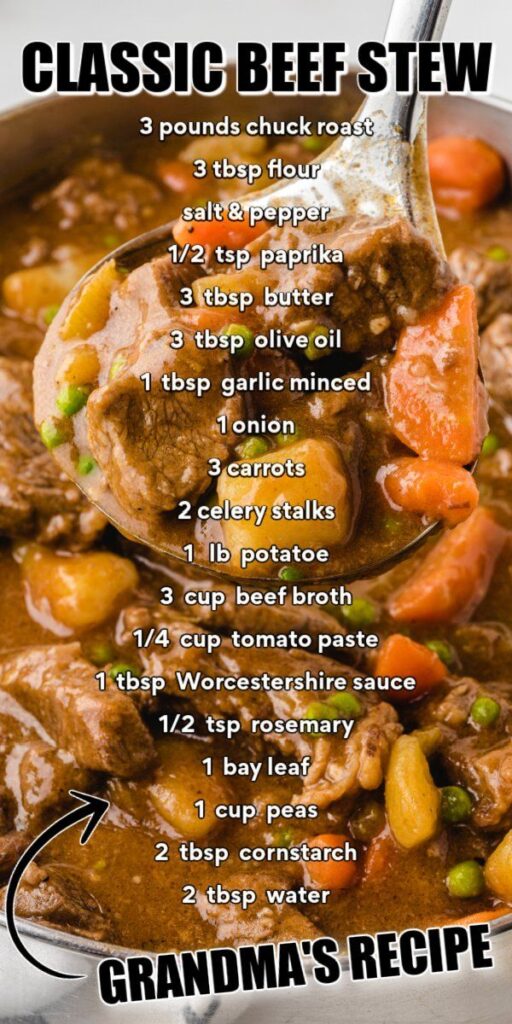
This Beef Stew is the ultimate comfort food: chunks of beef so tender they give way under a spoon, carrots and potatoes that soak up a deep, glossy gravy, and that slow-simmered flavor that smells like a Sunday kitchen even on a Tuesday. The first bite is savory and rich, the broth clings to your tongue, and the vegetables turn sweet and soft against the meat.
Advertisements1
I keep this recipe honest and short on purpose. Good stew is not about twenty spices; it is about browning the beef properly, letting the fond build up, and giving the pot time to do its quiet work. You will not need any specialty ingredients, and if you are missing one, I have given you a swap for every single item.
It is a one-pot dinner that feeds a crowd and tastes even better tomorrow. Make it once and it becomes the recipe you text to everyone.
Why You'll Love This Recipe
About the Ingredients
2 1/2 lbs (1.1 kg) beef chuck roast, cut into 1 1/2-inch chunks
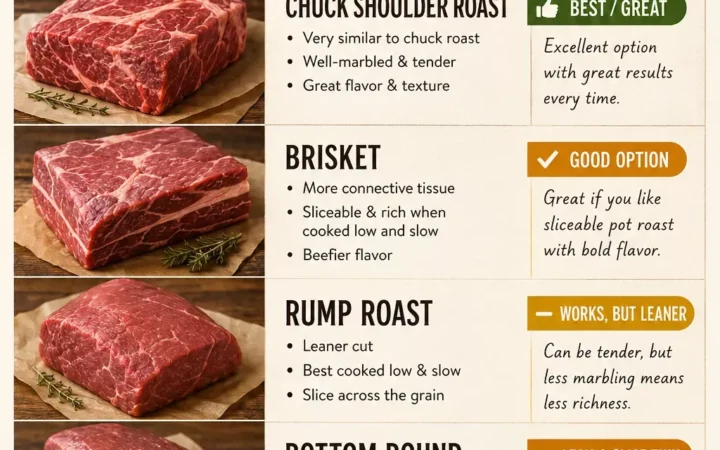
Chuck is the best cut because its marbling melts into the gravy. If you cannot find chuck, use boneless short ribs or blade steak, both of which braise beautifully.
2 tsp kosher salt, plus more to taste
Kosher salt seasons evenly and is harder to overdo than fine table salt. If using table salt, start with 1 1/2 tsp and taste before adding more.
1 tsp freshly ground black pepper
Freshly ground pepper blooms in the hot pan; pre-ground works in a pinch but use a heaping 3/4 tsp for similar punch.
3 tbsp all-purpose flour
Flour coats the beef and thickens the gravy as it simmers. For a gluten-free stew, swap in 2 tbsp cornstarch whisked into the broth at the end.
3 tbsp olive oil, divided
Olive oil handles the high sear without smoking. Canola or avocado oil are excellent neutral swaps if you prefer a milder flavor.
1 large yellow onion, chopped into 1-inch pieces
Yellow onion gives the deepest sweetness once browned. White onion works too, or use 2 shallots for a gentler, silkier base.
3 garlic cloves, minced
Fresh garlic is worth it here; it perfumes the whole pot. In a rush, 1 tsp garlic paste substitutes fine, added at the same moment.
3 tbsp tomato paste
Tomato paste adds body and a subtle sweetness that rounds out the gravy. Sun-dried tomato paste is a lovely swap if you have it.
4 cups (960 ml) low-sodium beef broth
Low-sodium broth lets you control the seasoning. If you only have regular broth, skip the extra salt until the very end.
1 lb (450 g) Yukon Gold potatoes, cut into 1 1/2-inch chunks
Yukon Golds hold their shape while turning creamy inside. Russets work but will thicken the gravy more; baby reds need no peeling at all.
3 large carrots, cut into 1-inch coins
Carrots bring sweetness and color. Parsnips are a delicious, slightly peppery substitute if you want to change things up.
2 tbsp Worcestershire sauce
Worcestershire adds savory depth you cannot quite name. Soy sauce or coconut aminos are solid substitutes in the same amount.
Tips & Tricks
Do not crowd the pan when browning
Work in two batches so the beef sears instead of steaming, which is the number one reason stews taste flat.
Brown the tomato paste
Cooking it for a full minute until it darkens turns its raw tang into a sweet, deep base for the gravy.
Add potatoes late
Stirring them in for the last 25 minutes keeps them whole instead of dissolving into mush.
Season at the end too
Salt levels change as the broth reduces, so taste right before serving and adjust.
Pro Tips
Step-by-Step Instructions
1. Pat and Season the Beef
Pat the beef chunks completely dry with paper towels and toss them with the salt, pepper, and flour until evenly coated. Drying the meat is what gives you a deep golden crust instead of a gray, steamed surface.
2. Sear in Batches
Heat 2 tbsp of the olive oil in a large Dutch oven over medium-high heat (about 400F / 205C) until it shimmers. Add half the beef and sear undisturbed for 4 minutes per side, until deeply golden brown, then transfer to a plate and repeat with the remaining beef.
3. Soften the Aromatics
Add the last 1 tbsp oil, then the onion, and cook over medium heat (about 350F / 175C) for 5 minutes, stirring, until the edges are translucent and lightly golden. Stir in the garlic and cook 30 seconds, just until fragrant and no longer raw-smelling.
4. Bloom the Tomato Paste
Push the onions aside, add the tomato paste to the center of the pan, and cook for 1 minute, stirring, until it darkens to a brick red and smells sweet. This step builds the backbone of the gravy.
5. Deglaze and Simmer
Pour in the broth and Worcestershire, scraping the bottom of the pot with a wooden spoon until every brown bit loosens, about 1 minute. Return the beef and any juices to the pot and bring to a gentle simmer (about 200F / 93C), then cover and cook for 45 minutes, until the beef is starting to give when pressed with a spoon.
6. Add the Vegetables
Stir in the potatoes and carrots, cover, and simmer for 25 to 30 minutes more, until the potatoes are fork-tender and the gravy bubbles gently at the edges. If the liquid looks thin, uncover for the last 10 minutes to reduce it.
7. Taste and Adjust
Turn off the heat, taste the gravy, and add salt and pepper as needed. Let the stew rest off the heat for 10 minutes so the gravy thickens and the flavors settle before you ladle it into bowls.
Delicious Variations
Red Wine Beef Stew
Swap 1 cup of the broth for dry red wine, adding it right after the tomato paste and simmering 2 minutes to mellow before the broth goes in.
Slow Cooker Version
Brown the beef and onions on the stove first, then transfer everything except the potatoes to a slow cooker and cook on low for 6 hours, adding potatoes in the last 2 hours.
Herby Mushroom Stew
Add 8 oz (225 g) sliced cremini mushrooms with the onions and 1 tsp dried thyme with the broth for an earthier, meatier pot.
How to Store Beef Stew
Refrigerator
Store in an airtight container in the refrigerator for up to 4 days; the flavors actually improve by day two.
Freezer
Freeze in portioned containers for up to 3 months, leaving 1 inch of headspace; thaw overnight in the refrigerator before reheating.
Reheating
Reheat gently on the stove over medium-low heat (about 300F / 150C) for 8 to 10 minutes, stirring occasionally, and add a splash of broth if the gravy has thickened too much.
Frequently Asked Questions
Q: What is the best cut of beef for beef stew?
Chuck roast is the best cut for beef stew because its marbling breaks down into tender meat and rich gravy during a long simmer. Boneless short ribs and blade steak are excellent alternatives with similar fat content. Avoid lean cuts like sirloin, which turn dry and chewy.
Q: Why is my beef stew tough?
Beef stew turns out tough when it is simmered too fast or not long enough, so the connective tissue never melts. Keep the pot at a gentle bubble around 200F (93C) and give it the full time; the beef should press apart easily with a spoon. Also avoid adding cold liquid to a hot pot, which stalls the cooking.
Q: Can I make beef stew in a slow cooker?
Yes, beef stew works beautifully in a slow cooker, but brown the beef and onions on the stove first for real depth of flavor. Cook on low for 6 to 7 hours, adding the potatoes and carrots in the last 2 hours so they do not turn to mush.
Q: How do I thicken beef stew?
The easiest way to thicken beef stew is to simmer it uncovered for 10 minutes so the liquid reduces and concentrates. For a faster fix, whisk 1 tbsp cornstarch with 2 tbsp cold water and stir it in, simmering 2 minutes until glossy. The flour coating on the beef already does most of the work.
Q: Can you overcook beef stew?
Yes, you can overcook beef stew, and the meat will start to shred and turn mushy after about 3 hours of simmering. Once the beef is fork-tender, stop cooking; if you need to hold it, keep it warm on low rather than simmering.
Ladle this Beef Stew into deep bowls, add a hunk of crusty bread for dipping, and watch everyone go quiet at the table. If you make it, I would love to hear which swap you tried. Taste as you go, trust your tongue.
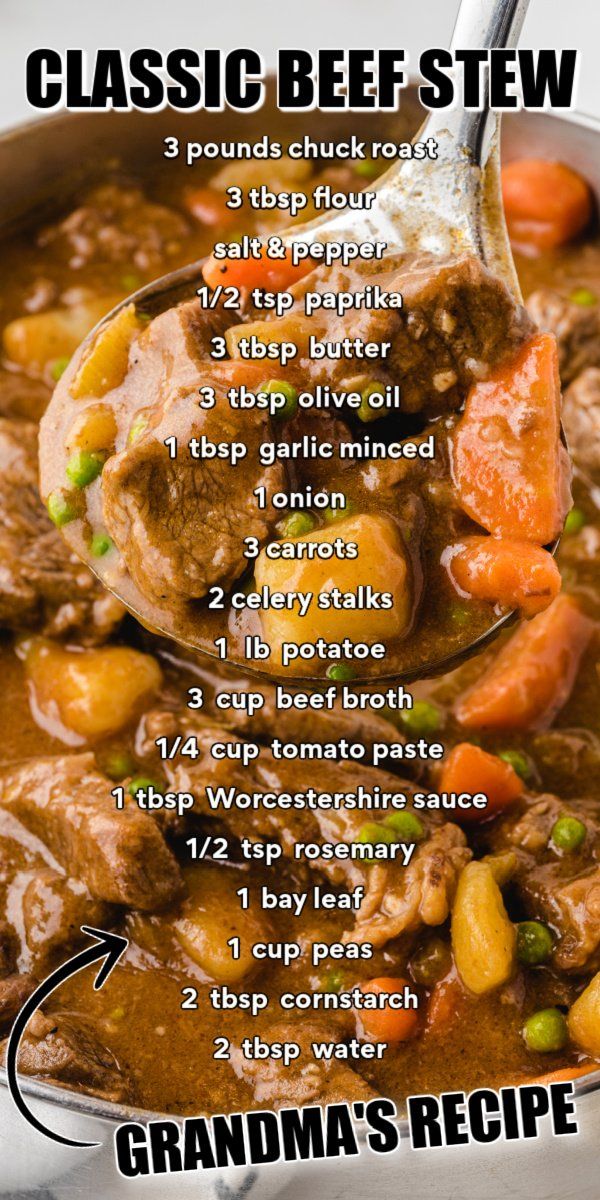
Beef Stew
This Beef Stew is the ultimate comfort food, with fall-apart beef and silky gravy that warms you from the inside out on any cold night.
🧂 Ingredients
- 2 1/2 lbs (1.1 kg) beef chuck roast, cut into 1 1/2-inch chunks
- 2 tsp kosher salt, plus more to taste
- 1 tsp freshly ground black pepper
- 3 tbsp all-purpose flour
- 3 tbsp olive oil, divided
- 1 large yellow onion, chopped into 1-inch pieces
- 3 garlic cloves, minced
- 3 tbsp tomato paste
- 4 cups (960 ml) low-sodium beef broth
- 1 lb (450 g) Yukon Gold potatoes, cut into 1 1/2-inch chunks
- 3 large carrots, cut into 1-inch coins
- 2 tbsp Worcestershire sauce
📋 Instructions
- 1Pat and Season the Beef — Pat the beef chunks completely dry with paper towels and toss them with the salt, pepper, and flour until evenly coated. Drying the meat is what gives you a deep golden crust instead of a gray, steamed surface.
- 2Sear in Batches — Heat 2 tbsp of the olive oil in a large Dutch oven over medium-high heat (about 400F / 205C) until it shimmers. Add half the beef and sear undisturbed for 4 minutes per side, until deeply golden brown, then transfer to a plate and repeat with the remaining beef.
- 3Soften the Aromatics — Add the last 1 tbsp oil, then the onion, and cook over medium heat (about 350F / 175C) for 5 minutes, stirring, until the edges are translucent and lightly golden. Stir in the garlic and cook 30 seconds, just until fragrant and no longer raw-smelling.
- 4Bloom the Tomato Paste — Push the onions aside, add the tomato paste to the center of the pan, and cook for 1 minute, stirring, until it darkens to a brick red and smells sweet. This step builds the backbone of the gravy.
- 5Deglaze and Simmer — Pour in the broth and Worcestershire, scraping the bottom of the pot with a wooden spoon until every brown bit loosens, about 1 minute. Return the beef and any juices to the pot and bring to a gentle simmer (about 200F / 93C), then cover and cook for 45 minutes, until the beef is starting to give when pressed with a spoon.
- 6Add the Vegetables — Stir in the potatoes and carrots, cover, and simmer for 25 to 30 minutes more, until the potatoes are fork-tender and the gravy bubbles gently at the edges. If the liquid looks thin, uncover for the last 10 minutes to reduce it.
- 7Taste and Adjust — Turn off the heat, taste the gravy, and add salt and pepper as needed. Let the stew rest off the heat for 10 minutes so the gravy thickens and the flavors settle before you ladle it into bowls.

Priya writes about cooking for busy people who want food that tastes like effort was made. Her angle is building flavor with few ingredients and forgiving techniques that survive a rushed weeknight. She writes about substitutions freely and treats recipes as starting points rather than rules.