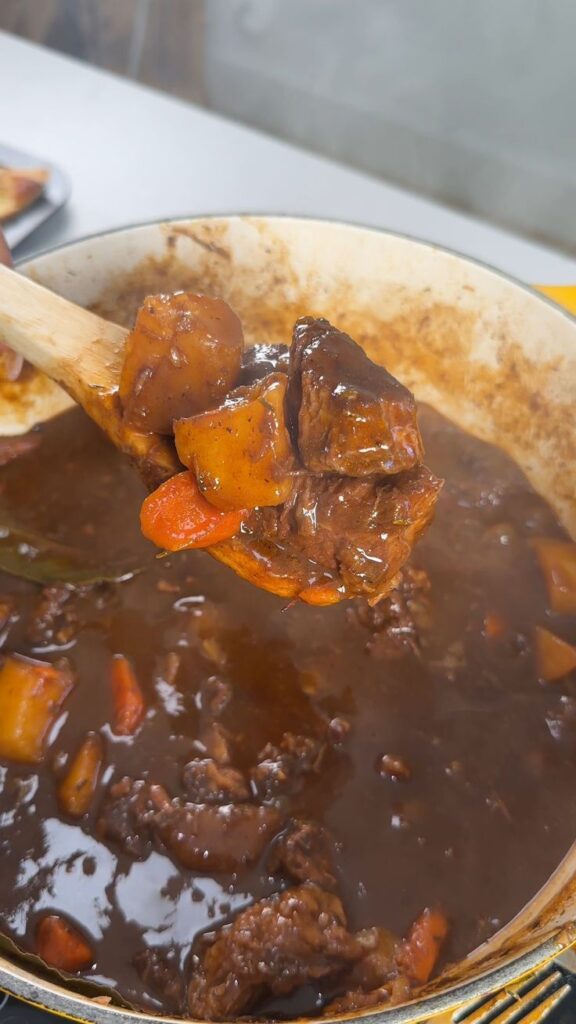
Beef stew is what you make when the weather has opinions and you do not want to argue. The finished bowl is dark, glossy, and thick enough to coat a spoon, with beef that gives way under a fork and carrots that still know they were once carrots.
Advertisements1
The method here is deliberate: brown the meat in batches, build a real gravy on the fond, then let time do the rest. The most common failure point is crowding the pot at the start, which steams the beef gray instead of browning it, so read that step twice before you turn on the heat.
Tools you will need: a heavy 6-quart Dutch oven with a lid, tongs, a wooden spoon, a cutting board, a chef's knife, a ladle, and a timer you actually set. That is the whole kit.
Why You'll Love This Recipe
About the Ingredients
3 lb (1.35 kg) beef chuck, cut into 1 1/2-inch cubes
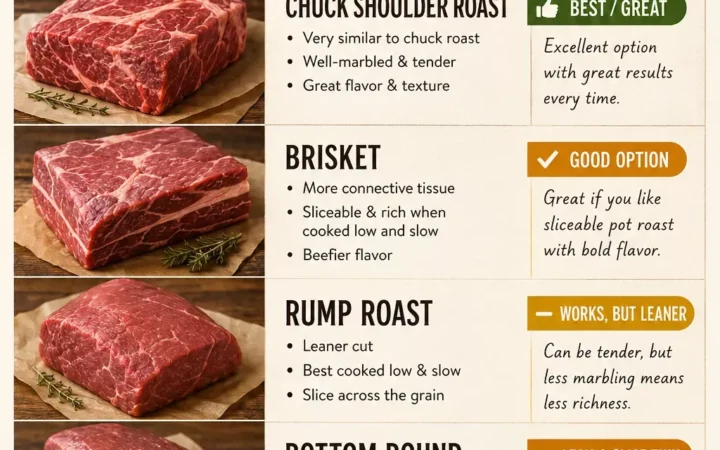
Chuck is the right cut because its collagen melts into gelatin and makes the gravy silky. If chuck is unavailable, use boneless short rib or bottom round, but expect the round to be firmer.
2 1/2 tsp kosher salt, divided
Kosher salt seasons more evenly than fine table salt by volume. If you only have table salt, cut the total to about 1 3/4 tsp.
1 1/2 tsp freshly ground black pepper
Fresh grinding matters here because pre-ground pepper goes flat during a long simmer. A coffee grinder reserved for spices works fine.
3 tbsp vegetable oil, divided
You need a high-smoke-point oil so the beef browns instead of smoking bitterly. Canola or refined avocado oil are easy swaps.
1 large yellow onion, diced (about 1 1/2 cups)
Yellow onion gives the sweetest base after long cooking. White onion works but is sharper; sweet onion turns almost jammy.
3 medium carrots, peeled and cut into 1-inch chunks
Buy carrots with their tops still on if you can, since they are sweeter and less woody. Parsnips make a fine substitute for half the carrots.
1 lb (450 g) Yukon Gold potatoes, cut into 1 1/2-inch chunks
Yukon Golds hold their shape while turning creamy at the edges. Russets will thicken the gravy but tend to fall apart.
3 tbsp all-purpose flour
Flour is the thickener and it must be cooked into the fat to lose its raw taste. For gluten-free, use 1 1/2 tbsp cornstarch whisked in at the very end.
3 cups (720 ml) low-sodium beef broth
Low-sodium broth lets you control the final seasoning. If using homemade stock, taste before adding the last of the salt.
1 tbsp tomato paste
Tomato paste adds depth rather than tomato flavor. Sun-dried tomato paste is a punchier substitute; use half as much.
2 tsp Worcestershire sauce
This is the quiet umami lever in the pot. Soy sauce or a splash of fish sauce substitutes well if you are out.
2 dried bay leaves and 1 tsp dried thyme
Dried herbs are correct here because fresh ones fade over 90 minutes. If you have fresh thyme, add it in the last 15 minutes instead.
Tips & Tricks
Do Not Crowd the Pot
Brown the beef in three batches so each piece gets hot dry contact with the pan, which is what produces browning rather than steam.
Simmer, Never Boil
Keep the pot at a bare bubble around 195 F (90 C) so the beef fibers relax instead of seizing into shoe leather.
Season in Layers
Salt the raw beef, then taste the gravy only after the flour has cooked in, since the flour absorbs a surprising amount of salt.
Cut Everything Evenly
Uniform 1 1/2-inch chunks mean the potatoes and carrots finish at the same time as the beef, so measure once with your eye and once with the knife.
Pro Tips
Step-by-Step Instructions
1. Season the beef
Pat the beef cubes completely dry with paper towel, then toss them with 2 tsp of the salt and all of the pepper. Let them sit at room temperature for 15 minutes while you chop the vegetables.
2. Heat the Dutch oven
Set a 6-quart Dutch oven over medium-high heat for 4 minutes, then add 1 tbsp of the oil and wait until it shimmers, about 30 seconds. A drop of water should sizzle on contact.
3. Brown in batches
Sear the beef in three batches, 3 to 4 minutes per side, until deeply golden brown on at least two sides, adding 1 tbsp oil per batch. Transfer each batch to a plate; the beef will not be cooked through yet and should not be.
4. Soften the vegetables
Lower the heat to medium, add the remaining 1 tbsp oil, and cook the onion and carrots for 6 to 7 minutes, stirring, until the onion is translucent and the edges are just golden.
5. Build the gravy
Stir in the tomato paste and cook for 1 minute until it darkens to brick red, then sprinkle the flour over the vegetables and stir constantly for 2 minutes until no dry flour remains and the mixture smells toasted rather than raw.
6. Deglaze and simmer
Pour in the broth slowly while scraping the bottom of the pot, then add the Worcestershire sauce, thyme, bay leaves, and the browned beef with its juices. Bring to a bare simmer at 195 F (90 C), cover, and cook for 60 minutes.
7. Add the potatoes
Stir in the potatoes and the remaining 1/2 tsp salt, return to a bare simmer at 195 F (90 C), and cook uncovered for 30 to 35 minutes. The stew is done when a potato crushes easily against the side of the pot and the beef pulls apart with a fork.
8. Rest and serve
Fish out the bay leaves, taste for salt, and let the pot sit off the heat for 10 minutes. The gravy will thicken as it cools; serve in deep bowls with bread on standby.
Delicious Variations
Red Wine Version
Replace 1 cup of the broth with dry red wine, added right after the tomato paste so the alcohol cooks off, for a darker and more complex gravy.
Slow Cooker Version
Brown the beef and vegetables on the stove first, then transfer everything to a slow cooker and cook on low for 7 hours, adding the potatoes in the last 2 hours.
Mushroom and Barley Swap
Reduce the potatoes to 1/2 lb and add 1 cup of pearl barley and 8 oz of cremini mushrooms with the broth for a heartier, grain-based stew.
How to Store Beef Stew
Refrigerator
Store in an airtight container in the refrigerator for up to 4 days; the flavor improves by day two, and you may need to skim a little fat from the surface.
Freezer
Freeze in portioned containers for up to 3 months, leaving 1 inch of headspace; potatoes soften noticeably after freezing, so thaw overnight in the refrigerator.
Reheating
Reheat gently on the stovetop over medium-low heat at 200 F (93 C) for 8 to 10 minutes, stirring occasionally, and add a splash of broth if the gravy has tightened too much.
Frequently Asked Questions
Q: What is the best cut of beef for beef stew?
Chuck is the best cut for beef stew because its marbling and collagen break down into a tender texture and a silky gravy. Boneless short rib is the next best choice, while lean cuts like sirloin turn dry and chewy over a long simmer.
Q: Why is my beef stew tough?
Beef stew turns out tough when it is simmered too briefly or at too high a boil, which tightens the muscle fibers before the collagen can melt. Keep the pot at a bare bubble around 195 F (90 C) and give it the full 90 minutes of cooking time.
Q: Can I add the potatoes at the start?
You can add the potatoes at the start, but they will break down and thicken the gravy rather than hold their shape. Add them in the last 30 to 35 minutes for distinct chunks, or use russets deliberately if you want a thicker stew.
Q: How do I thicken beef stew that is too thin?
Whisk 1 tbsp of cornstarch with 2 tbsp of cold water and stir it into the simmering stew, then cook for 2 minutes until it visibly thickens. Alternatively, mash a few potato chunks against the side of the pot for a natural fix.
Q: Does beef stew taste better the next day?
Yes, beef stew generally tastes better the next day because the flavors meld and the gravy thickens as it rests overnight. Cool it quickly, refrigerate it, and reheat gently the following evening.
Make this on a Sunday and you have solved three weeknights in advance. If you cook it, tell me how the gravy turned out, because that is the part that separates a good stew from a great one. Measure twice, then measure again.
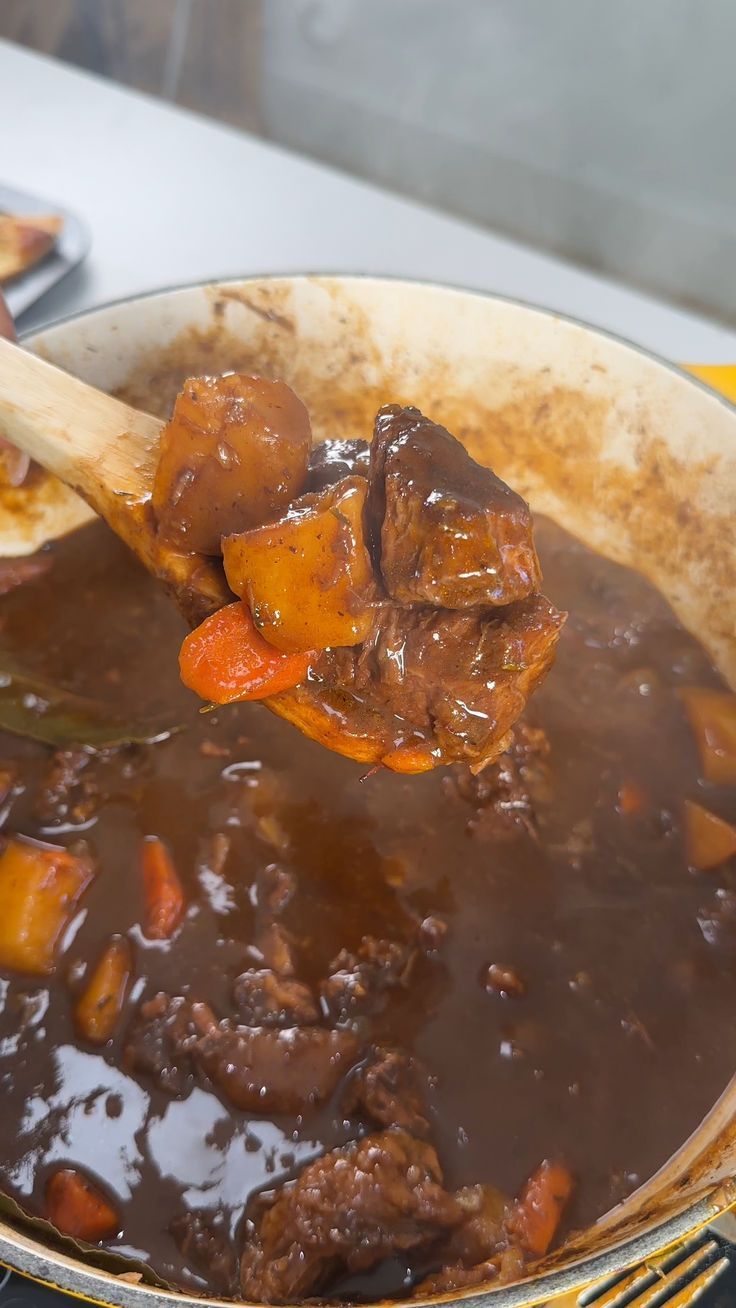
Beef Stew
This best beef stew delivers fork-tender chuck and silky gravy in one pot, a deeply savory cold-weather dinner worth the simmer.
🧂 Ingredients
- 3 lb (1.35 kg) beef chuck, cut into 1 1/2-inch cubes
- 2 1/2 tsp kosher salt, divided
- 1 1/2 tsp freshly ground black pepper
- 3 tbsp vegetable oil, divided
- 1 large yellow onion, diced (about 1 1/2 cups)
- 3 medium carrots, peeled and cut into 1-inch chunks
- 1 lb (450 g) Yukon Gold potatoes, cut into 1 1/2-inch chunks
- 3 tbsp all-purpose flour
- 3 cups (720 ml) low-sodium beef broth
- 1 tbsp tomato paste
- 2 tsp Worcestershire sauce
- 2 dried bay leaves and 1 tsp dried thyme
📋 Instructions
- 1Season the beef — Pat the beef cubes completely dry with paper towel, then toss them with 2 tsp of the salt and all of the pepper. Let them sit at room temperature for 15 minutes while you chop the vegetables.
- 2Heat the Dutch oven — Set a 6-quart Dutch oven over medium-high heat for 4 minutes, then add 1 tbsp of the oil and wait until it shimmers, about 30 seconds. A drop of water should sizzle on contact.
- 3Brown in batches — Sear the beef in three batches, 3 to 4 minutes per side, until deeply golden brown on at least two sides, adding 1 tbsp oil per batch. Transfer each batch to a plate; the beef will not be cooked through yet and should not be.
- 4Soften the vegetables — Lower the heat to medium, add the remaining 1 tbsp oil, and cook the onion and carrots for 6 to 7 minutes, stirring, until the onion is translucent and the edges are just golden.
- 5Build the gravy — Stir in the tomato paste and cook for 1 minute until it darkens to brick red, then sprinkle the flour over the vegetables and stir constantly for 2 minutes until no dry flour remains and the mixture smells toasted rather than raw.
- 6Deglaze and simmer — Pour in the broth slowly while scraping the bottom of the pot, then add the Worcestershire sauce, thyme, bay leaves, and the browned beef with its juices. Bring to a bare simmer at 195 F (90 C), cover, and cook for 60 minutes.
- 7Add the potatoes — Stir in the potatoes and the remaining 1/2 tsp salt, return to a bare simmer at 195 F (90 C), and cook uncovered for 30 to 35 minutes. The stew is done when a potato crushes easily against the side of the pot and the beef pulls apart with a fork.
- 8Rest and serve — Fish out the bay leaves, taste for salt, and let the pot sit off the heat for 10 minutes. The gravy will thicken as it cools; serve in deep bowls with bread on standby.

Tomas writes about home repair and small-scale building projects, focused on what a careful beginner can actually finish. He explains tools and materials by what they do rather than by brand, and he walks through mistakes he has made on his own projects. His angle is honest sequencing: what to do first, what to skip, and when to call someone else.