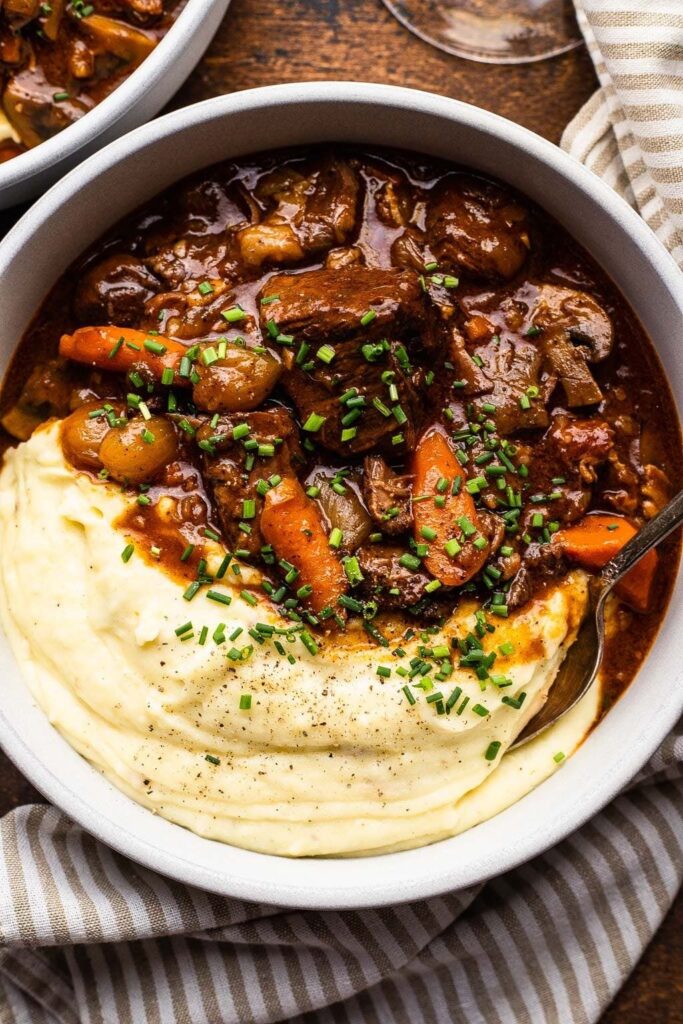
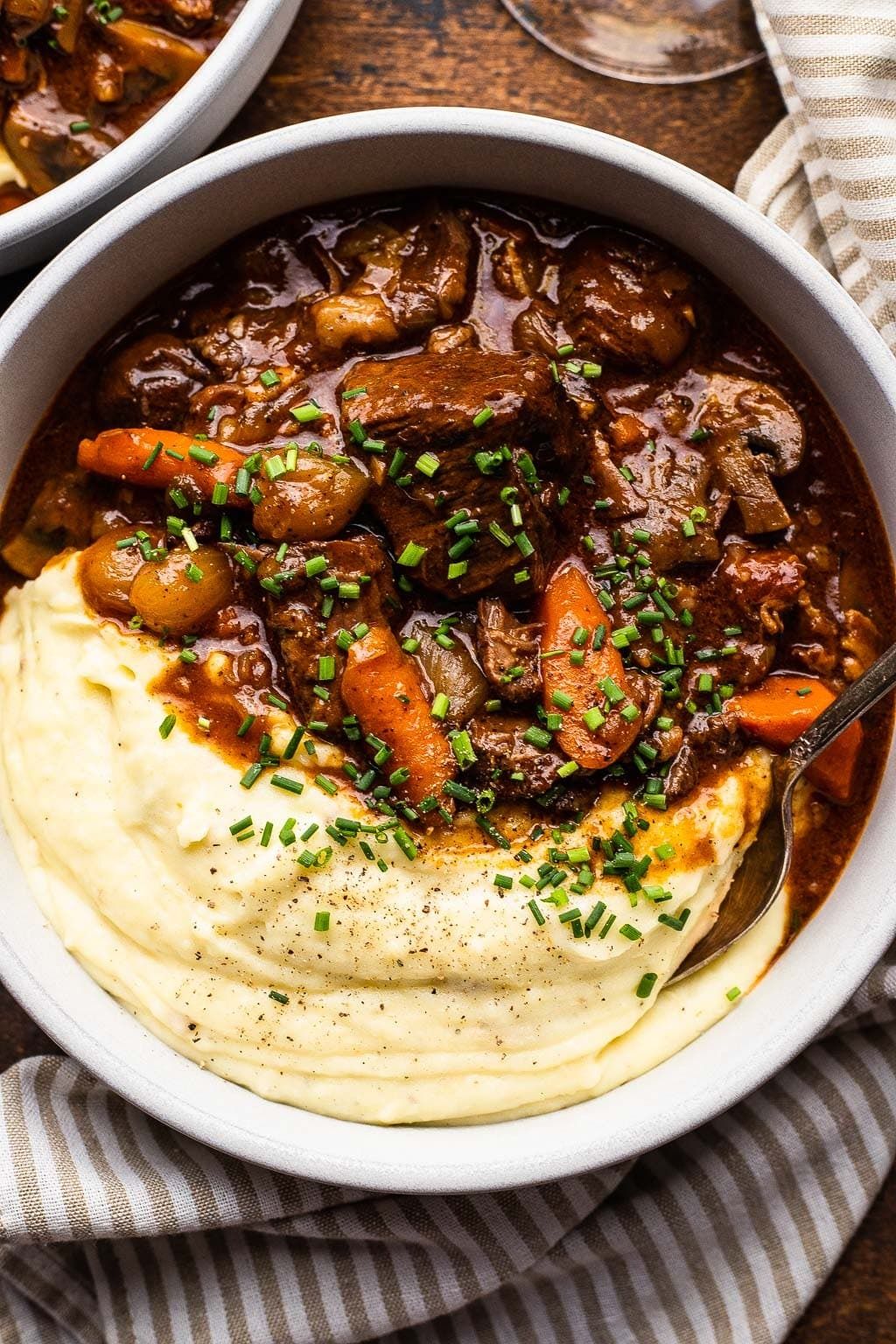
This is the finished result you are working toward: chunks of chuck that yield to a spoon, a sauce the color of dark mahogany that coats the back of that spoon, and pearl onions that taste like they were braised by someone with more patience than you have. It takes about three and a half hours, most of it unattended, and it is worth every minute of it.
Advertisements1
I will flag the most common failure point right now: browning in a crowded pan. If the beef steams instead of sears, you get gray meat and a thin sauce, and no amount of wine fixes it. Brown in batches, in a wide heavy pot, and let each piece sit until it releases itself. That is the whole secret.
Below you get tools, then ingredients, then numbered steps with exact temperatures, because guessing is how stews go wrong.
Why You'll Love This Recipe
About the Ingredients
3.5 lb (1.6 kg) beef chuck, cut into 1.5-inch (4 cm) cubes
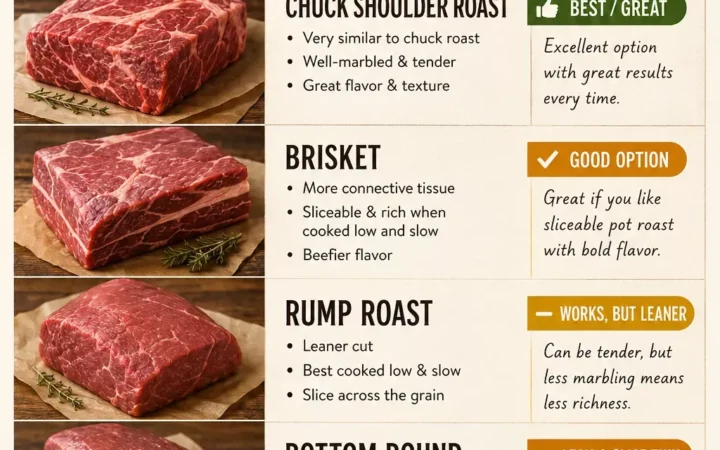
Chuck is the right cut because its collagen melts into gelatin, which is what makes the sauce glossy. If chuck is unavailable, boneless short rib works and is arguably richer.
6 oz (170 g) thick-cut bacon or slab pancetta, cut into 1/2-inch (1 cm) pieces
Thick-cut bacon gives you rendered fat to brown the beef in and salty nuggets to find later. Slab pancetta is a less smoky substitute if you want the wine to lead.
2 tbsp (30 ml) olive oil, plus more as needed
You need a high-smoke-point fat for the sear; regular olive oil is fine, but save the expensive stuff for finishing. Avocado oil substitutes cleanly if your pan runs dry.
2 medium yellow onions, diced (about 2 cups / 260 g)
Yellow onions dissolve into the sauce and provide body. Shallots are a sweeter, more delicate swap if you are serving this to people who notice such things.
3 medium carrots, cut into 1-inch (2.5 cm) rounds
Carrots hold their shape over a long braise and add sweetness that balances the wine's tannin. Parsnips work but turn slightly floral, so use half and half.
3 cloves garlic, minced
Mince it fine so it disappears into the sauce rather than burning on the pot bottom. Jarred garlic is acceptable here; the long cook erases the difference.
3 tbsp (24 g) all-purpose flour
Flour thickens the braise and helps the sauce cling to the meat. For gluten-free, use 1 1/2 tbsp cornstarch whisked into cold stock instead, added at the end.
3 cups (720 ml) dry red wine, such as Pinot Noir or Côtes du Rhône
Use something dry and drinkable but cheap; tannic Cabernet turns bitter over three hours. A dry cider substitutes if you want a fruitier, lower-alcohol result.
2 cups (480 ml) beef stock, plus more to cover
Good stock is the backbone; boxed low-sodium is fine, and you can adjust salt at the end. Chicken stock substitutes in a pinch but gives a lighter, less meaty sauce.
1 tbsp (15 g) tomato paste
Tomato paste adds color and glutamate depth without tasting like tomato. Sun-dried tomato paste is a punchier substitute; use half the amount.
1 bouquet garni: 4 sprigs thyme, 2 bay leaves, 4 parsley stems, tied in cheesecloth
This bundle lets you pull the aromatics out before serving. No cheesecloth? Use a large tea infuser or just fish the bay leaves out at the end.
10 oz (280 g) pearl onions, peeled, plus 8 oz (225 g) cremini mushrooms, quartered
These go in near the end so they keep their shape and texture. Frozen pearl onions save twenty minutes of peeling and are genuinely just as good.
Tips & Tricks
Dry the beef before it hits the pan
pat each cube with paper towels, because surface moisture is the enemy of browning and the reason stew meat turns gray.
Brown in three batches, not one
a crowded pot drops to steaming temperature and you lose the crust that gives the sauce its color and flavor.
Salt at the end, not the beginning
the wine and stock reduce significantly, so early salting concentrates into something aggressive.
- Deglaze with a wooden spoon and scrape hard: the brown film on the pot bottom is concentrated flavor, and leaving it there wastes the best part of the dish.
Pro Tips
Step-by-Step Instructions
1. Preheat and set up
Heat the oven to 325°F (165°C) and set a rack in the lower third. Have a 6- to 7-quart Dutch oven ready; this is a one-pot dish and the pot size matters more than the brand.
2. Render the bacon
Cook the bacon in the Dutch oven over medium heat for 8 to 10 minutes, until the fat runs and the pieces are crisp and golden brown at the edges. Remove with a slotted spoon and leave the fat behind.
3. Brown the beef
Pat the beef dry, season it, and brown it in three batches over medium-high heat, 4 to 5 minutes per side, until deeply golden brown on at least two faces. Crowding the pot here is the mistake that ruins this dish, so resist it.
4. Soften the vegetables
Lower the heat to medium, add the onions and carrots, and cook for 6 to 8 minutes until the onions are translucent and the edges begin to brown. Add the garlic and tomato paste and stir for 60 seconds, until the paste darkens and smells sweet rather than sharp.
5. Build the braise
Return the beef and bacon to the pot, sprinkle the flour over everything, and stir for 2 minutes to coat. Pour in the wine and stock, scraping the bottom with a wooden spoon until every brown patch lifts, then tuck in the bouquet garni.
6. Braise low and slow
Bring to a bare simmer on the stove, cover, and transfer to the oven for 2 hours 30 minutes. The liquid should be bubbling gently at the edges, never rolling; check at the 1-hour mark and add stock if the meat is not mostly submerged.
7. Add the garnish
Stir in the pearl onions and mushrooms, re-cover, and return to the oven for 40 minutes more. The beef is done when a cube crushes against the side of the pot with no resistance and reads 200°F to 205°F (93°C to 96°C) on an instant-read thermometer.
8. Reduce and finish
Pull the bouquet garni, skim any fat from the surface, and if the sauce is thin, simmer uncovered on the stove for 10 to 15 minutes at 200°F (95°C) until it coats a spoon. Taste and adjust salt, then rest 10 minutes before serving.
Delicious Variations
Instant Pot version
Brown the beef in the pot on sauté mode, then pressure-cook everything except the garnish for 35 minutes on high with a 10-minute natural release, and simmer the onions and mushrooms separately on the stove.
Slow cooker version
Do all the browning and deglazing on the stove, then transfer to a slow cooker on low for 7 hours, adding the pearl onions and mushrooms in the final hour.
White wine version
Swap the red for a dry white like Sauvignon Blanc and add a tablespoon of Dijon; the result is brighter and lighter, closer to a coq au vin in spirit.
How to Store Classic Beef Bourguignon
Refrigerator
Cool uncovered for 30 minutes, then refrigerate covered for up to 4 days; the flavor improves by day two, and the fat will cap and lift off cleanly.
Freezer
Freeze in portions for up to 3 months, leaving 1 inch of headspace; potatoes do not survive freezing, but this dish has none, so it freezes beautifully.
Reheating
Reheat gently on the stovetop over medium-low at 200°F (95°C) for 10 to 15 minutes, stirring occasionally; the microwave works but toughens the meat at the edges.
Frequently Asked Questions
Q: What is the best wine for beef bourguignon?
A dry, medium-bodied red like Pinot Noir or Côtes du Rhône is the right choice, and it should be cheap enough that you don't mind pouring three cups into a pot. Avoid heavily oaked or high-tannin wines like Cabernet Sauvignon, because three hours of reduction turns those tannins harsh and bitter.
Q: Can I make beef bourguignon without wine?
Yes, substitute an equal volume of beef stock plus two tablespoons of red wine vinegar and one tablespoon of tomato paste for the wine. The result is less complex but entirely respectable, and it avoids the alcohol if that matters to your table.
Q: Why did my beef bourguignon turn out tough?
The beef was almost certainly undercooked rather than overcooked, because chuck needs to reach 200°F to 205°F (93°C to 96°C) internally before the collagen breaks down. If a cube still resists a fork, put the covered pot back in a 325°F (165°C) oven for another 30 minutes and check again.
Q: Can I make beef bourguignon ahead of time?
Yes, and you should, because it tastes better on day two once the sauce has settled and the fat has been skimmed. Make it up to four days ahead, refrigerate it, and reheat gently on the stovetop; the flavor deepens noticeably overnight.
Q: What do you serve with beef bourguignon?
Serve it with something that absorbs sauce: mashed potatoes, buttered egg noodles, or thick slices of crusty bread. Boiled potatoes are the traditional pairing in Burgundy, and they let the sauce do the talking rather than competing with it.
Make it on a Sunday, eat it on a Tuesday, and tell everyone you slaved over it. If you cook it, come back and leave a comment about which wine you used, because that detail changes the whole pot. Measure twice, then measure again.
Classic Beef Bourguignon
Classic Beef Bourguignon turns cheap chuck into fork-tender beef in a glossy red wine sauce, with bacon, carrots and pearl onions doing the heavy lifting.
🧂 Ingredients
- 3.5 lb (1.6 kg) beef chuck, cut into 1.5-inch (4 cm) cubes
- 6 oz (170 g) thick-cut bacon or slab pancetta, cut into 1/2-inch (1 cm) pieces
- 2 tbsp (30 ml) olive oil, plus more as needed
- 2 medium yellow onions, diced (about 2 cups / 260 g)
- 3 medium carrots, cut into 1-inch (2.5 cm) rounds
- 3 cloves garlic, minced
- 3 tbsp (24 g) all-purpose flour
- 3 cups (720 ml) dry red wine, such as Pinot Noir or Côtes du Rhône
- 2 cups (480 ml) beef stock, plus more to cover
- 1 tbsp (15 g) tomato paste
- 1 bouquet garni: 4 sprigs thyme, 2 bay leaves, 4 parsley stems, tied in cheesecloth
- 10 oz (280 g) pearl onions, peeled, plus 8 oz (225 g) cremini mushrooms, quartered
📋 Instructions
- 1Preheat and set up — Heat the oven to 325°F (165°C) and set a rack in the lower third. Have a 6- to 7-quart Dutch oven ready; this is a one-pot dish and the pot size matters more than the brand.
- 2Render the bacon — Cook the bacon in the Dutch oven over medium heat for 8 to 10 minutes, until the fat runs and the pieces are crisp and golden brown at the edges. Remove with a slotted spoon and leave the fat behind.
- 3Brown the beef — Pat the beef dry, season it, and brown it in three batches over medium-high heat, 4 to 5 minutes per side, until deeply golden brown on at least two faces. Crowding the pot here is the mistake that ruins this dish, so resist it.
- 4Soften the vegetables — Lower the heat to medium, add the onions and carrots, and cook for 6 to 8 minutes until the onions are translucent and the edges begin to brown. Add the garlic and tomato paste and stir for 60 seconds, until the paste darkens and smells sweet rather than sharp.
- 5Build the braise — Return the beef and bacon to the pot, sprinkle the flour over everything, and stir for 2 minutes to coat. Pour in the wine and stock, scraping the bottom with a wooden spoon until every brown patch lifts, then tuck in the bouquet garni.
- 6Braise low and slow — Bring to a bare simmer on the stove, cover, and transfer to the oven for 2 hours 30 minutes. The liquid should be bubbling gently at the edges, never rolling; check at the 1-hour mark and add stock if the meat is not mostly submerged.
- 7Add the garnish — Stir in the pearl onions and mushrooms, re-cover, and return to the oven for 40 minutes more. The beef is done when a cube crushes against the side of the pot with no resistance and reads 200°F to 205°F (93°C to 96°C) on an instant-read thermometer.
- 8Reduce and finish — Pull the bouquet garni, skim any fat from the surface, and if the sauce is thin, simmer uncovered on the stove for 10 to 15 minutes at 200°F (95°C) until it coats a spoon. Taste and adjust salt, then rest 10 minutes before serving.

Tomas writes about home repair and small-scale building projects, focused on what a careful beginner can actually finish. He explains tools and materials by what they do rather than by brand, and he walks through mistakes he has made on his own projects. His angle is honest sequencing: what to do first, what to skip, and when to call someone else.