It's 6 p.m., the light is already gone, and you want something that makes the whole kitchen smell like a warm room. That's this stew. A heavy pot, a pound and a half of chuck, and about two hours of mostly waiting.
Advertisements1
The trick is browning. Not a quick sear, but real browning, in batches, until the beef is mahogany and the bottom of the pot has a dark crust you'll scrape up later. That crust is the flavor. Skip it and you get gray meat in brown water.
I won't pretend this is a 30-minute dinner. It's a Sunday pot that rewards patience and feeds six people for two days. The trade-off is time, and it's worth it. Keep it small, keep it going.
Why You'll Love This Recipe
About the Ingredients
2 1/2 lb (1.1 kg) beef chuck, cut into 1 1/2-inch cubes
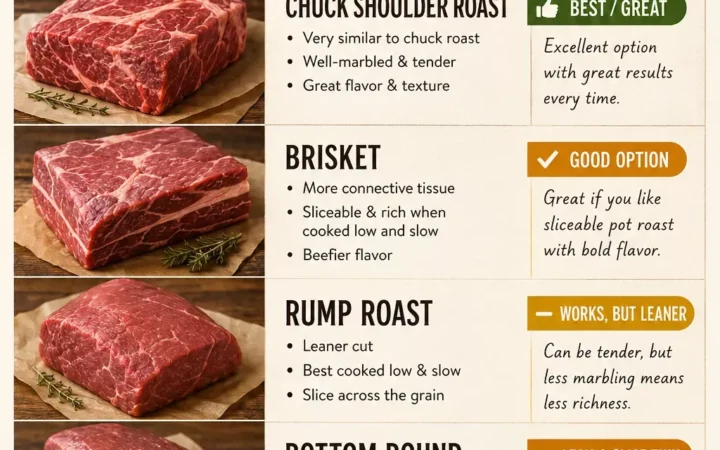
Chuck is the right cut because its fat and connective tissue melt into gelatin, which is what makes the gravy glossy. If chuck is sold out, use boneless short rib or bottom round and add 20 extra minutes of simmering.
2 tsp kosher salt, plus more to taste
Kosher salt dissolves faster and seasons more evenly than table salt. If you only have fine table salt, use half the amount, since it's much denser per teaspoon.
1 tsp freshly ground black pepper
Grind it yourself if you can; pre-ground pepper tastes flat and dusty. A cheap pepper mill beats a shaker every time.
3 tbsp vegetable oil, divided
Vegetable or canola oil handles high heat without smoking. Skip olive oil here, since it burns before the beef can brown properly.
1 large yellow onion, diced (about 1 1/2 cups)
Yellow onion gives the sweetest, deepest base. Sweet onions work too, but reduce the sugar in the recipe if you use them.
3 medium carrots, peeled and cut into 1-inch chunks
Buy carrots with the tops still on if you can; they're sweeter and less woody. If they're limp, soak them in cold water for 20 minutes to crisp them back up.
1 lb (450 g) Yukon Gold potatoes, cut into 1 1/2-inch chunks
Yukon Golds hold their shape and turn creamy at the edges. Russets will work but tend to crumble and cloud the gravy.
3 tbsp all-purpose flour
Flour thickens the stew and helps the beef brown. For a gluten-free version, swap in 1 1/2 tbsp cornstarch whisked into 3 tbsp cold water at the very end.
3 cups (720 ml) low-sodium beef broth
Low-sodium lets you control the salt. If you only have regular broth, skip the added salt until the end and taste first.
1 tbsp tomato paste
Tomato paste adds body and a subtle sweetness without making it taste like tomato sauce. Buy it in a tube so you don't waste a whole can.
2 dried bay leaves and 1 tsp dried thyme
Dried herbs are fine here because they simmer for hours. Fresh thyme works too; use three sprigs and fish them out before serving.
1 tbsp Worcestershire sauce
This is the quiet flavor booster that makes people ask what's in it. Soy sauce or a splash of balsamic vinegar can stand in if you're out.
Tips & Tricks
Brown in Batches
Crowding the pot steams the beef instead of searing it, so give each piece space and expect three batches.
Scrape the Fond
Those dark bits stuck to the pot are concentrated flavor; deglaze with broth and scrape them up with a wooden spoon.
Salt at the End
Broth reduces and concentrates, so season fully only in the last 15 minutes or it turns salty.
Cut Evenly
Uniform 1 1/2-inch cubes cook at the same rate, which means no mushy pieces next to tough ones.
Pro Tips
Step-by-Step Instructions
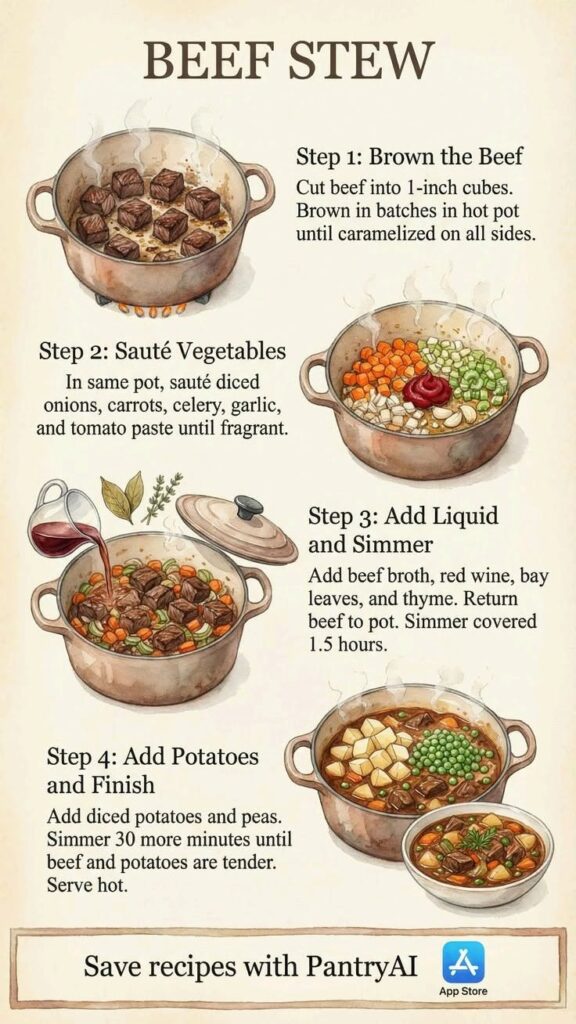
1. Dry and Season the Beef
Pat the cubed chuck completely dry with paper towels, then toss with the kosher salt and black pepper. Dry meat browns; wet meat steams. Let it sit at room temperature for 15 minutes while you chop the vegetables.
2. Sear in Batches
Heat 1 tablespoon of oil in a large Dutch oven over medium-high heat (about 400°F / 205°C) until it shimmers. Add one-third of the beef and cook 4 to 5 minutes per side, undisturbed, until deeply golden brown on at least two sides. Transfer to a plate and repeat twice with the remaining oil and beef.
3. Soften the Aromatics
Lower the heat to medium (about 350°F / 175°C) and add the onion and carrots to the pot. Cook 5 to 6 minutes, stirring, until the onion is translucent and the edges are just starting to brown. Stir in the tomato paste and flour and cook 1 minute, until it smells nutty rather than raw.
4. Deglaze the Pot
Pour in about 1/2 cup of the broth and scrape the bottom of the pot firmly with a wooden spoon to lift the browned crust. Keep scraping until the liquid looks dark and the pot bottom is clean, about 1 minute.
5. Simmer Low and Slow
Return the beef and any juices to the pot, then add the remaining broth, Worcestershire sauce, bay leaves, and thyme. Bring to a bare simmer (about 200°F / 93°C at the surface, with small bubbles at the edges), cover, and cook 1 hour 15 minutes. The beef should be tender when pierced with a fork but not yet falling apart.
6. Add the Potatoes
Stir in the potatoes, cover, and simmer another 35 to 40 minutes, until a knife slides into a potato with no resistance and the gravy coats the back of a spoon. Taste and add salt and pepper as needed.
7. Rest and Serve
Fish out the bay leaves, turn off the heat, and let the stew rest uncovered for 10 minutes so the gravy tightens around the meat. Serve hot with crusty bread or over buttered noodles.
Delicious Variations
Red Wine Version
Replace 1 cup of the broth with dry red wine and simmer 10 minutes longer for a deeper, more grown-up flavor.
Slow Cooker Version
Brown the beef on the stove first, then transfer everything except the potatoes to a slow cooker on low for 6 hours, adding potatoes in the last 90 minutes.
Herb Dumpling Topping
Drop 8 small biscuit-dough balls on top in the last 20 minutes, cover, and steam until puffed and dry on top.
How to Store Classic Homemade Beef Stew – Step-by-Step Comfort Recipe
Refrigerator
Store in an airtight container for up to 4 days. The flavor actually improves by day two, though the potatoes will soften.
Freezer
Freeze in portions for up to 3 months in freezer-safe containers, leaving 1 inch of headspace. Thaw overnight in the fridge before reheating.
Reheating
Warm gently on the stovetop over medium-low heat (about 300°F / 150°C) for 8 to 10 minutes, stirring occasionally. Add a splash of broth if the gravy looks thick.
Frequently Asked Questions
Q: Why is my beef stew tough?
Your beef was likely cooked too fast or not long enough, since chuck needs time for its connective tissue to break down. Keep the pot at a bare simmer, never a rolling boil, and give it the full hour and 15 minutes before you add the potatoes.
Q: Can I make beef stew in a slow cooker?
Yes, but brown the beef on the stove first or you'll lose most of the flavor. Sear the meat, deglaze the pan, then transfer everything but the potatoes to the slow cooker on low for 6 hours, adding the potatoes in the last 90 minutes.
Q: What is the best cut of beef for stew?
Chuck is the best all-around choice because its marbling and connective tissue turn tender and glossy during a long simmer. Short rib and bottom round are solid backups, though bottom round needs extra cooking time.
Q: Why is my stew watery?
You probably skipped the flour or used too much liquid for the pot size. Toss the beef in flour before browning, and if it's still thin at the end, simmer uncovered for 10 minutes to reduce it.
Q: Can I add frozen vegetables to beef stew?
Yes, but add them in the last 10 minutes so they don't turn to mush. Frozen peas and corn are the best choices since they hold up well and don't water down the gravy.
Buy a chuck roast this week, cube it, and brown it properly in three batches. That single step is the difference between forgettable stew and the pot your family asks for. Keep it small, keep it going.
Classic Homemade Beef Stew – Step-by-Step Comfort Recipe
Classic homemade beef stew with fall-apart chuck, sweet carrots, and a glossy herb gravy that thickens on its own. One pot, real comfort, zero fuss.
🧂 Ingredients
- 2 1/2 lb (1.1 kg) beef chuck, cut into 1 1/2-inch cubes
- 2 tsp kosher salt, plus more to taste
- 1 tsp freshly ground black pepper
- 3 tbsp vegetable oil, divided
- 1 large yellow onion, diced (about 1 1/2 cups)
- 3 medium carrots, peeled and cut into 1-inch chunks
- 1 lb (450 g) Yukon Gold potatoes, cut into 1 1/2-inch chunks
- 3 tbsp all-purpose flour
- 3 cups (720 ml) low-sodium beef broth
- 1 tbsp tomato paste
- 2 dried bay leaves and 1 tsp dried thyme
- 1 tbsp Worcestershire sauce
📋 Instructions
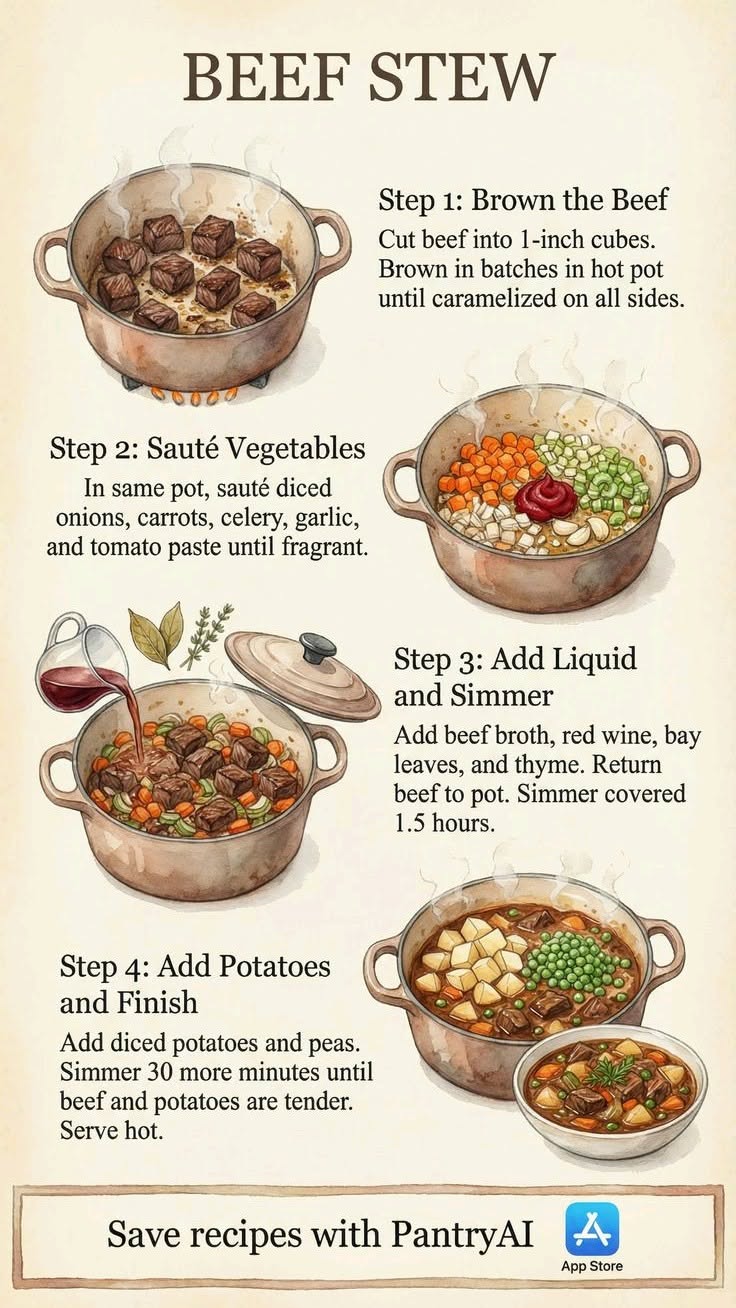
- 1Dry and Season the Beef — Pat the cubed chuck completely dry with paper towels, then toss with the kosher salt and black pepper. Dry meat browns; wet meat steams. Let it sit at room temperature for 15 minutes while you chop the vegetables.
- 2Sear in Batches — Heat 1 tablespoon of oil in a large Dutch oven over medium-high heat (about 400°F / 205°C) until it shimmers. Add one-third of the beef and cook 4 to 5 minutes per side, undisturbed, until deeply golden brown on at least two sides. Transfer to a plate and repeat twice with the remaining oil and beef.
- 3Soften the Aromatics — Lower the heat to medium (about 350°F / 175°C) and add the onion and carrots to the pot. Cook 5 to 6 minutes, stirring, until the onion is translucent and the edges are just starting to brown. Stir in the tomato paste and flour and cook 1 minute, until it smells nutty rather than raw.
- 4Deglaze the Pot — Pour in about 1/2 cup of the broth and scrape the bottom of the pot firmly with a wooden spoon to lift the browned crust. Keep scraping until the liquid looks dark and the pot bottom is clean, about 1 minute.
- 5Simmer Low and Slow — Return the beef and any juices to the pot, then add the remaining broth, Worcestershire sauce, bay leaves, and thyme. Bring to a bare simmer (about 200°F / 93°C at the surface, with small bubbles at the edges), cover, and cook 1 hour 15 minutes. The beef should be tender when pierced with a fork but not yet falling apart.
- 6Add the Potatoes — Stir in the potatoes, cover, and simmer another 35 to 40 minutes, until a knife slides into a potato with no resistance and the gravy coats the back of a spoon. Taste and add salt and pepper as needed.
- 7Rest and Serve — Fish out the bay leaves, turn off the heat, and let the stew rest uncovered for 10 minutes so the gravy tightens around the meat. Serve hot with crusty bread or over buttered noodles.

Mira writes about everyday money habits for people who never got a straight answer about budgeting. Her angle is small, repeatable routines over dramatic overhauls, and she tests every tip on her own household first. She favors plain numbers, real receipts, and admitting when something did not work.