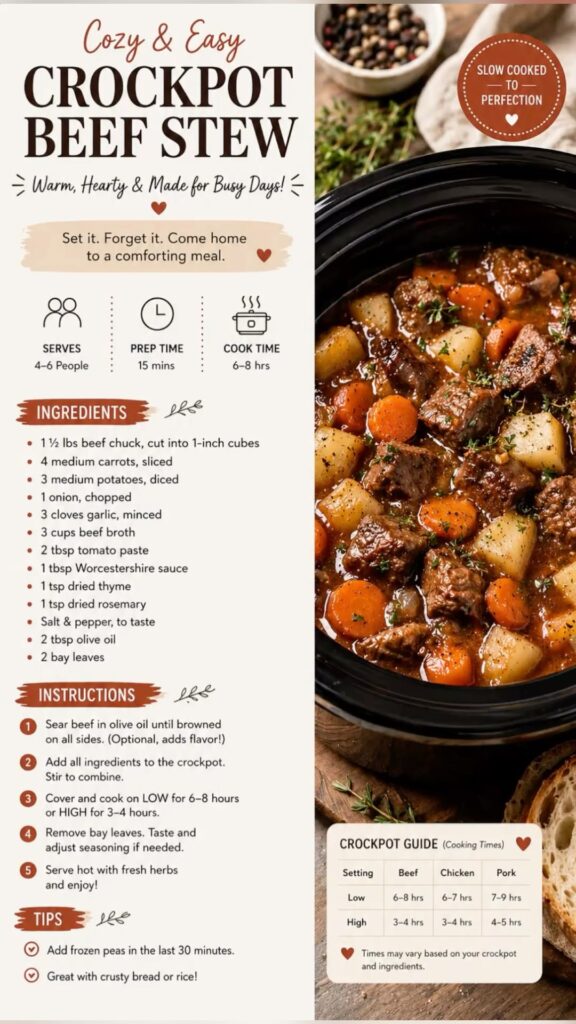
It's 7:40 on a Tuesday, you're already running late, and dinner is still a frozen brick. That's the moment this crockpot beef stew earns its keep. You brown the beef, dump everything in, and walk away for eight hours.
Advertisements1
The trade-off is time, not effort. You can't rush a slow cooker. What you get back is chuck roast that falls apart under a spoon and a gravy that tastes like you stood at the stove all afternoon.
One thing I won't skip: browning the beef first. It's ten extra minutes and it's the difference between flat stew and stew that tastes like something. Your call, but I know which one I make.
Why You'll Love This Recipe
About the Ingredients
3 lb (1.35 kg) boneless beef chuck roast, cut into 1 1/2-inch chunks
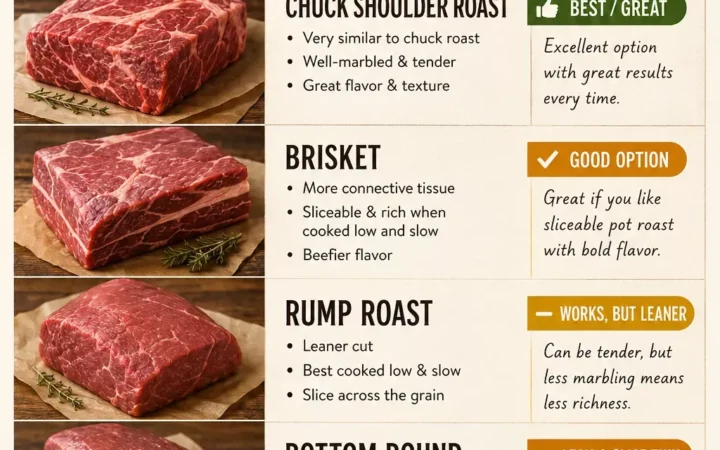
Chuck is the right choice because its marbling melts into the gravy. If chuck is sold out, boneless short ribs work beautifully, though they cost more.
2 tbsp (30 ml) vegetable oil
Use an oil with a high smoke point for the browning step. Canola or avocado oil both work; skip olive oil here, it burns before the beef browns.
1 large yellow onion, chopped (about 1 1/2 cups / 200g)
Yellow onion gives the deepest sweetness. In a pinch, two shallots or a leek (white part only) will do.
3 medium carrots, cut into 1-inch pieces (about 2 cups / 260g)
Buy carrots with the thickest tops you can find; thick carrots hold their shape over long cooking. Baby carrots turn mushy, so avoid them.
1 1/2 lb (680 g) Yukon Gold potatoes, cut into 1 1/2-inch chunks
Yukon Golds stay creamy without falling apart. Russets will work but break down and thicken the gravy more, which some people love.
3 tbsp (24 g) all-purpose flour
Flour thickens the gravy as it cooks. For gluten-free, swap in 2 tbsp cornstarch whisked into the broth before adding.
3 cups (720 ml) low-sodium beef broth
Low-sodium lets you control the salt. If you only have regular broth, cut the added salt in half and taste at the end.
2 tbsp (30 g) tomato paste
Tomato paste adds body and a subtle tang. No tube on hand? Use 3 tbsp tomato sauce and reduce the broth by 2 tbsp.
1 tbsp (15 ml) Worcestershire sauce
This is the umami cheat code. Soy sauce or coconut aminos are solid substitutes if Worcestershire isn't in your pantry.
1 tsp dried thyme, 1 tsp smoked paprika, 2 bay leaves
Smoked paprika brings a campfire note. Regular paprika is fine, but add 1/4 tsp liquid smoke if you want that depth back.
1 1/2 tsp kosher salt, plus more to taste; 1 tsp black pepper
Kosher salt seasons more evenly than table salt. If using fine table salt, start with 1 tsp and adjust at the end.
1 cup (150 g) frozen peas, stirred in at the end
Frozen peas keep their color and pop. Frozen green beans cut into 1-inch pieces are a good swap.
Tips & Tricks
Don't skip the browning
pat the beef dry and sear it in batches over medium-high heat (about 400F / 205C pan surface) for 3-4 minutes per side until deeply golden. Crowding the pan steams the meat instead of browning it.
Layer potatoes on the bottom
they sit in the liquid and cook evenly instead of drying out on top. It also keeps them from turning to mush.
Thicken at the end, not the start
if the gravy looks thin after cooking, whisk 1 tbsp cornstarch with 2 tbsp cold water and stir it in on High for 15 minutes until it bubbles at the edges.
Season in stages
salt the beef before browning, then taste and adjust only after the stew finishes. Slow cookers concentrate salt over hours, so early over-seasoning is hard to fix.
Pro Tips
Step-by-Step Instructions
1. Dry and season the beef
Pat the beef chunks completely dry with paper towels, then toss with 1 tsp of the kosher salt and the black pepper. Dry meat browns; wet meat steams, and steam gives you pale, flavorless stew.
2. Brown in batches
Heat 1 tbsp oil in a large skillet over medium-high heat until it shimmers, roughly 375-400F (190-205C). Add half the beef and cook 3-4 minutes per side until deeply golden brown, then move it to the slow cooker. Repeat with the remaining oil and beef.
3. Bloom the aromatics
Lower the heat to medium and cook the onion in the same skillet for 4-5 minutes until soft and translucent. Stir in the flour and tomato paste and cook 1 minute until it smells nutty and the paste darkens slightly.
4. Deglaze the pan
Pour in about 1/2 cup of the broth and scrape up every browned bit stuck to the skillet with a wooden spoon. Those browned bits are concentrated flavor; leave them and you lose it.
5. Load the slow cooker
Layer the potatoes in the bottom of a 6-quart slow cooker, then add the beef, carrots, onion mixture, remaining broth, Worcestershire sauce, thyme, smoked paprika, bay leaves, and remaining 1/2 tsp salt. Stir gently just to combine.
6. Cook low and slow
Cover and cook on Low for 8 hours or on High for 4 1/2 hours. The stew is done when the beef shreds under light pressure from a fork and the potatoes pierce easily with a knife. If you have an instant-read thermometer, the beef should read at least 200F (93C).
7. Finish with peas
Stir in the frozen peas, cover, and cook 10 more minutes until they're hot and bright green. Fish out the bay leaves, taste, and add salt or pepper as needed.
8. Rest before serving
Let the stew sit uncovered for 10 minutes so the gravy tightens up and the meat reabsorbs some liquid. Serve in deep bowls with crusty bread for mopping.
Delicious Variations
Red wine version
replace 1 cup of the broth with dry red wine and add it to the hot skillet after the onions to deglaze. It adds 15 minutes of simmering time but a much deeper flavor.
Mushroom and barley
add 8 oz sliced cremini mushrooms with the onions and 1/2 cup pearl barley with the broth. You'll need 1 extra cup of broth because barley drinks it up.
Smoky chipotle
stir in 1 minced chipotle in adobo with the tomato paste for a gentle heat. Start with half if your family is heat-shy; you can always add more at the end.
How to Store Slow Cooker Beef Stew
Refrigerator
Store in an airtight container for up to 4 days. The gravy thickens as it chills; loosen with a splash of broth when reheating.
Freezer
Freeze in portions for up to 3 months. Potatoes can turn slightly grainy after freezing, so if that bothers you, freeze the stew without them and add fresh cooked potatoes later.
Reheating
Reheat gently on the stovetop over medium-low heat for 8-10 minutes, stirring occasionally, until it bubbles at the edges. In the microwave, cover and heat in 1-minute bursts, stirring between each.
Frequently Asked Questions
Q: Can I put raw beef in the crockpot without browning it first?
Yes, you can, but the stew will taste noticeably flatter and the gravy will be paler. Browning takes about 10 minutes and creates the roasted flavor that makes this recipe worth making. If you're truly out of time, skip it, but add 1 extra tbsp Worcestershire to compensate.
Q: How long does beef stew take in a crockpot on high?
About 4 1/2 hours on High for a 3-pound chuck roast cut into 1 1/2-inch chunks. Check at 4 hours, since slow cookers run at different temperatures. The beef should shred easily with a fork.
Q: Why is my crockpot beef stew watery?
Usually because the lid was lifted too often or the vegetables released more water than expected. Keep the lid on, and if it's still thin at the end, whisk 1 tbsp cornstarch with 2 tbsp cold water and cook on High for 15 minutes.
Q: Can I use frozen beef in the slow cooker?
No, don't. Frozen beef stays in the food-safety danger zone too long as it thaws in a slow cooker. Thaw it fully in the refrigerator first, which takes about 24 hours for a 3-pound roast.
Q: What's the best cut of beef for slow cooker stew?
Chuck roast is the best choice because its marbling breaks down into tender meat and rich gravy. Bottom round and stew meat labeled simply 'stew beef' are leaner and turn tough and dry over long cooking.
Tonight, before you go to bed, cut the beef into chunks and salt it in a bowl. Tomorrow morning you brown it for ten minutes, load the crockpot, and walk out the door knowing dinner is handled. Keep it small, keep it going.
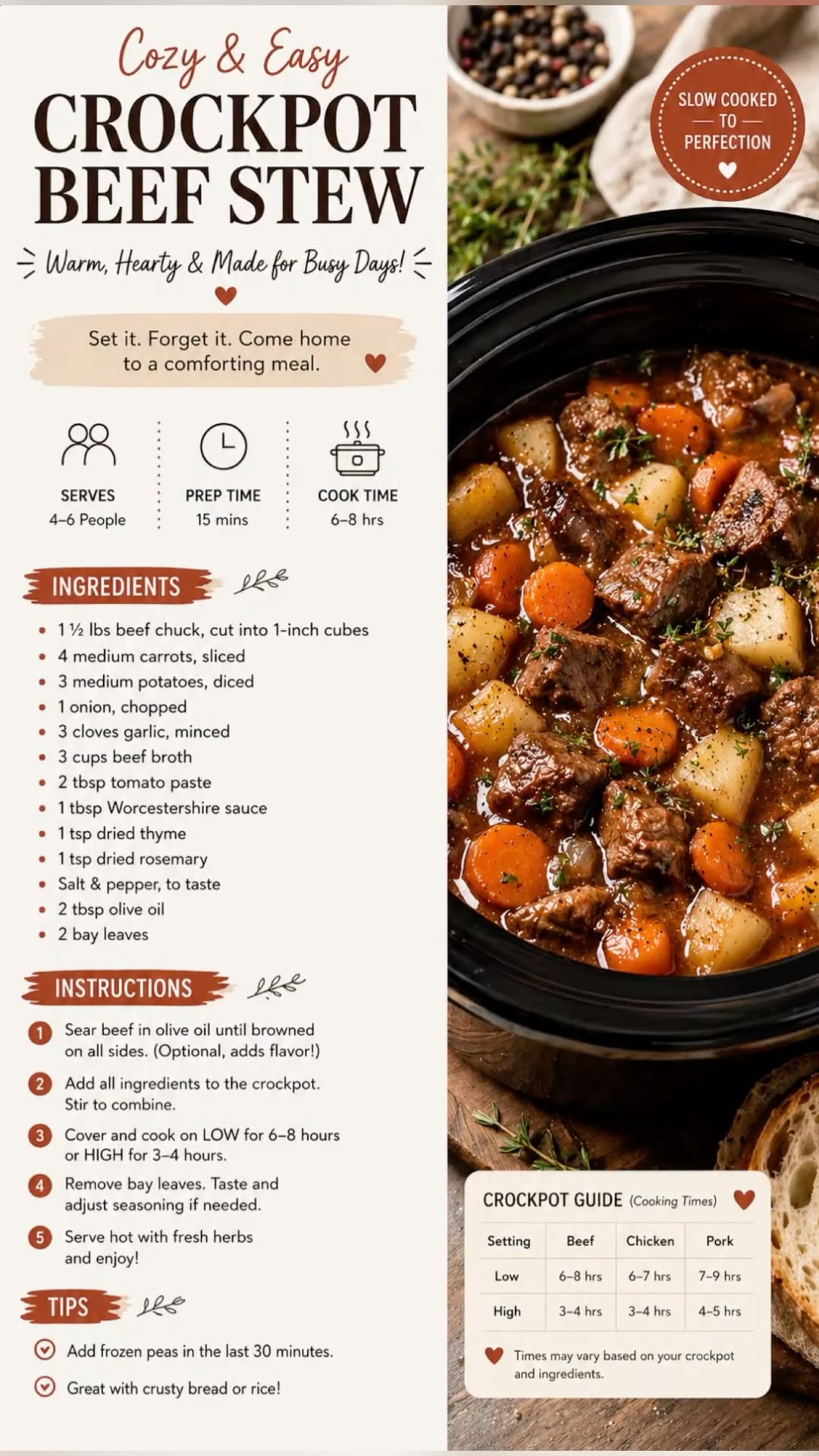
Slow Cooker Beef Stew
Crockpot beef stew builds deep flavor all day: fork-tender chuck, carrots and potatoes in a rich, glossy gravy with almost zero hands-on work.
🧂 Ingredients
- 3 lb (1.35 kg) boneless beef chuck roast, cut into 1 1/2-inch chunks
- 2 tbsp (30 ml) vegetable oil
- 1 large yellow onion, chopped (about 1 1/2 cups / 200g)
- 3 medium carrots, cut into 1-inch pieces (about 2 cups / 260g)
- 1 1/2 lb (680 g) Yukon Gold potatoes, cut into 1 1/2-inch chunks
- 3 tbsp (24 g) all-purpose flour
- 3 cups (720 ml) low-sodium beef broth
- 2 tbsp (30 g) tomato paste
- 1 tbsp (15 ml) Worcestershire sauce
- 1 tsp dried thyme, 1 tsp smoked paprika, 2 bay leaves
- 1 1/2 tsp kosher salt, plus more to taste; 1 tsp black pepper
- 1 cup (150 g) frozen peas, stirred in at the end
📋 Instructions
- 1Dry and season the beef — Pat the beef chunks completely dry with paper towels, then toss with 1 tsp of the kosher salt and the black pepper. Dry meat browns; wet meat steams, and steam gives you pale, flavorless stew.
- 2Brown in batches — Heat 1 tbsp oil in a large skillet over medium-high heat until it shimmers, roughly 375-400F (190-205C). Add half the beef and cook 3-4 minutes per side until deeply golden brown, then move it to the slow cooker. Repeat with the remaining oil and beef.
- 3Bloom the aromatics — Lower the heat to medium and cook the onion in the same skillet for 4-5 minutes until soft and translucent. Stir in the flour and tomato paste and cook 1 minute until it smells nutty and the paste darkens slightly.
- 4Deglaze the pan — Pour in about 1/2 cup of the broth and scrape up every browned bit stuck to the skillet with a wooden spoon. Those browned bits are concentrated flavor; leave them and you lose it.
- 5Load the slow cooker — Layer the potatoes in the bottom of a 6-quart slow cooker, then add the beef, carrots, onion mixture, remaining broth, Worcestershire sauce, thyme, smoked paprika, bay leaves, and remaining 1/2 tsp salt. Stir gently just to combine.
- 6Cook low and slow — Cover and cook on Low for 8 hours or on High for 4 1/2 hours. The stew is done when the beef shreds under light pressure from a fork and the potatoes pierce easily with a knife. If you have an instant-read thermometer, the beef should read at least 200F (93C).
- 7Finish with peas — Stir in the frozen peas, cover, and cook 10 more minutes until they're hot and bright green. Fish out the bay leaves, taste, and add salt or pepper as needed.
- 8Rest before serving — Let the stew sit uncovered for 10 minutes so the gravy tightens up and the meat reabsorbs some liquid. Serve in deep bowls with crusty bread for mopping.

Mira writes about everyday money habits for people who never got a straight answer about budgeting. Her angle is small, repeatable routines over dramatic overhauls, and she tests every tip on her own household first. She favors plain numbers, real receipts, and admitting when something did not work.