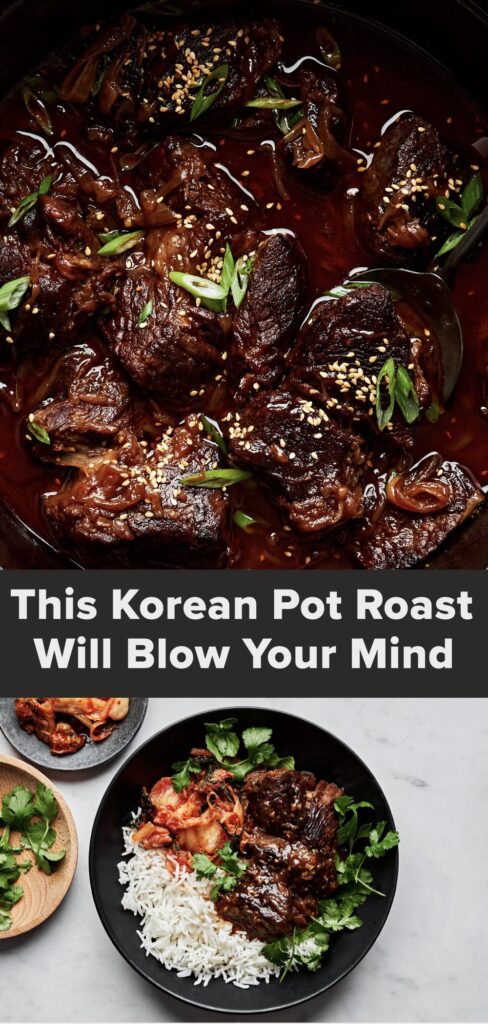
You come home at six, the kids are circling the kitchen, and you need something that cooks itself. This Korean Style Pot Roast is that answer. You brown a chuck roast, stir a sauce in a bowl, and walk away for three hours.
Advertisements1
The trick is the braise liquid. Gochujang brings a slow warmth, soy and pear add depth and a little sweetness, and the beef turns so tender a spoon cuts it. It tastes like you fussed. You did not.
The trade-off is time, not effort. This is a weekend or work-from-home dish, not a Tuesday-in-thirty-minutes dish. Start it early and it rewards you at dinner.
Why You'll Love This Recipe
About the Ingredients
3.5 lb (1.6 kg) boneless beef chuck roast
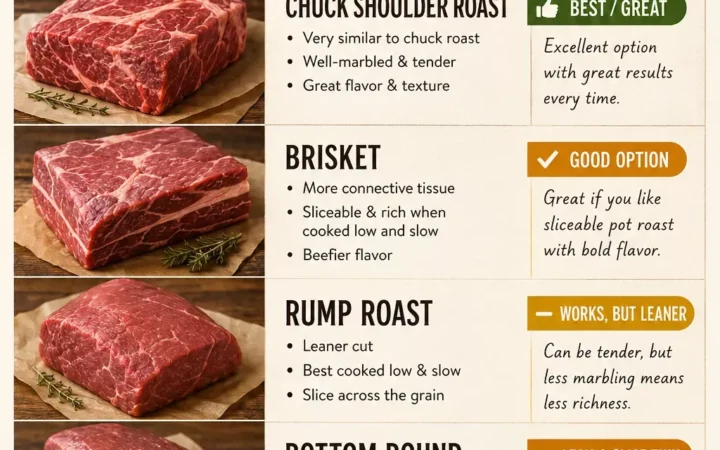
Chuck is the right cut because its tough fibers melt into gelatin during a long braise. If chuck is sold out, a 3.5 lb beef bottom round works but will be a bit less silky.
2 tbsp gochujang (Korean chili paste)
Gochujang is a fermented chili paste with a sweet, savory heat, sold in red tubs at Korean markets and most supermarkets. If you cannot find it, mix 1 tbsp miso paste with 1 tbsp sriracha as a stand-in.
1/3 cup (80 ml) soy sauce
Use regular soy sauce, not dark soy, which is too intense here. Tamari is a fine gluten-free swap with the same salty punch.
1/4 cup (60 ml) rice vinegar
Rice vinegar is mild and slightly sweet, so it brightens without sharpness. Apple cider vinegar works if you use 3 tbsp instead of 1/4 cup.
1 medium Asian pear, grated (about 1 cup)
Asian pear has enzymes that gently tenderize the beef and a clean sweetness. A ripe Bosc pear or 1/2 cup unsweetened applesauce is the closest substitute.
1 large yellow onion, sliced into thick wedges
Thick wedges hold their shape through a long braise. Two medium shallots can replace it if you want a milder, sweeter onion flavor.
6 garlic cloves, smashed
Smashing releases more flavor than chopping and saves time. Jarred minced garlic works in a pinch; use 2 tbsp.
2 tbsp honey
Honey rounds out the gochujang heat. Brown sugar or maple syrup measures the same and works just as well.
2 cups (480 ml) low-sodium beef broth
Low-sodium lets you control the salt, since soy and gochujang are already salty. Chicken broth is a fine swap with a slightly lighter flavor.
2 tbsp toasted sesame oil
Toasted sesame oil is the finishing oil, not a cooking oil, so add it at the end. Regular sesame oil is milder; use 3 tbsp if that is what you have.
3 medium carrots, cut into 2-inch chunks
Cut them thick so they survive the braise. Parsnips or small Yukon potatoes are good swaps if you want a starchier pot.
Tips & Tricks
- Do not skip the sear. Browning the beef in a hot pan builds the roasted flavor the sauce cannot create on its own.
- Keep the liquid at a gentle simmer, not a rolling boil. Hard boiling tightens the meat and makes it stringy instead of shreddable.
- Grate the pear on the large holes of a box grater so it melts into the sauce instead of leaving chunks.
- Salt at the end, not the start. The soy and gochujang concentrate as the sauce reduces, so early salting can push it over.
Pro Tips
Step-by-Step Instructions
1. Heat the oven
Set a rack in the lower third of the oven and preheat to 325°F (165°C). A moderate oven keeps the braise at a gentle bubble for the full cook time.
2. Pat and season the beef
Pat the chuck roast dry with paper towels and season all over with 1 tsp salt and 1/2 tsp black pepper. Dry meat browns better than wet meat.
3. Sear both sides
Heat 1 tbsp neutral oil in a Dutch oven over medium-high heat until it shimmers, about 2 minutes. Sear the roast 4 to 5 minutes per side until deep golden brown, then set it aside on a plate.
4. Soften the onion
Lower the heat to medium and add the onion wedges and smashed garlic. Cook 4 to 5 minutes, stirring, until the onion edges are soft and lightly golden.
5. Build the sauce
In a bowl, whisk the gochujang, soy sauce, rice vinegar, grated pear, honey, and beef broth. Pour it into the pot and scrape up the browned bits with a wooden spoon.
6. Braise low and slow
Return the roast to the pot, cover, and bake at 325°F (165°C) for 2 hours 30 minutes. The liquid should be bubbling gently at the edges, not boiling hard.
7. Add the carrots
Nestle the carrot chunks around the beef, cover, and bake another 45 to 50 minutes until the beef shreds easily with a fork and reads 205°F (96°C) at the center.
8. Rest and finish
Move the roast to a board and rest 15 minutes. Stir the sesame oil into the sauce, then shred the beef and return it to the pot with the carrots and sauce.
Delicious Variations
Spicy Gochujang Version
Add 1 extra tbsp gochujang and 1 tsp Korean chili flakes (gochugaru) for a bolder, hotter sauce.
Korean Tacos
Shred the beef, pile it into warm corn tortillas, and top with quick-pickled cucumber and a squeeze of lime.
Mushroom and Barley Pot
Swap the carrots for 8 oz sliced cremini mushrooms and add 1/2 cup pearl barley in the last 45 minutes for a heartier one-pot meal.
How to Store Korean Style Pot Roast
Refrigerator
Store in an airtight container in the refrigerator for up to 4 days; the flavor deepens by day two.
Freezer
Freeze the shredded beef and sauce in a freezer-safe container for up to 3 months; leave 1 inch of headspace.
Reheating
Reheat gently on the stovetop over medium-low heat with a splash of broth, about 8 to 10 minutes, until steaming but not boiling.
Frequently Asked Questions
Q: What is Korean style pot roast?
It is a slow-braised beef chuck roast seasoned with Korean pantry staples like gochujang, soy sauce, and Asian pear. The result is a sweet-spicy, fall-apart roast served with its own rich sauce.
Q: Can I make Korean pot roast in a slow cooker?
Yes. Sear the beef on the stovetop first, then cook everything on low for 8 to 9 hours or high for 4 to 5 hours. Add the carrots in the last 2 hours on low so they do not turn to mush.
Q: What do I serve with Korean style pot roast?
Steamed white rice is the classic pairing because it soaks up the sauce. Sliced scallions, kimchi, and quick-pickled cucumber round it out nicely.
Q: Is gochujang very spicy?
Gochujang is moderately spicy with a slow, sweet heat rather than a sharp burn. If you are heat-sensitive, start with 1 tbsp and taste the sauce before adding more.
Q: Can I use a different cut of beef?
Chuck is best, but brisket or bottom round work with a longer braise. Avoid lean cuts like sirloin, which dry out instead of shredding.
Buy a chuck roast this week and give it three quiet hours in the oven. Then tell me how your family ate it, because this one tends to disappear fast. Keep it small, keep it going.
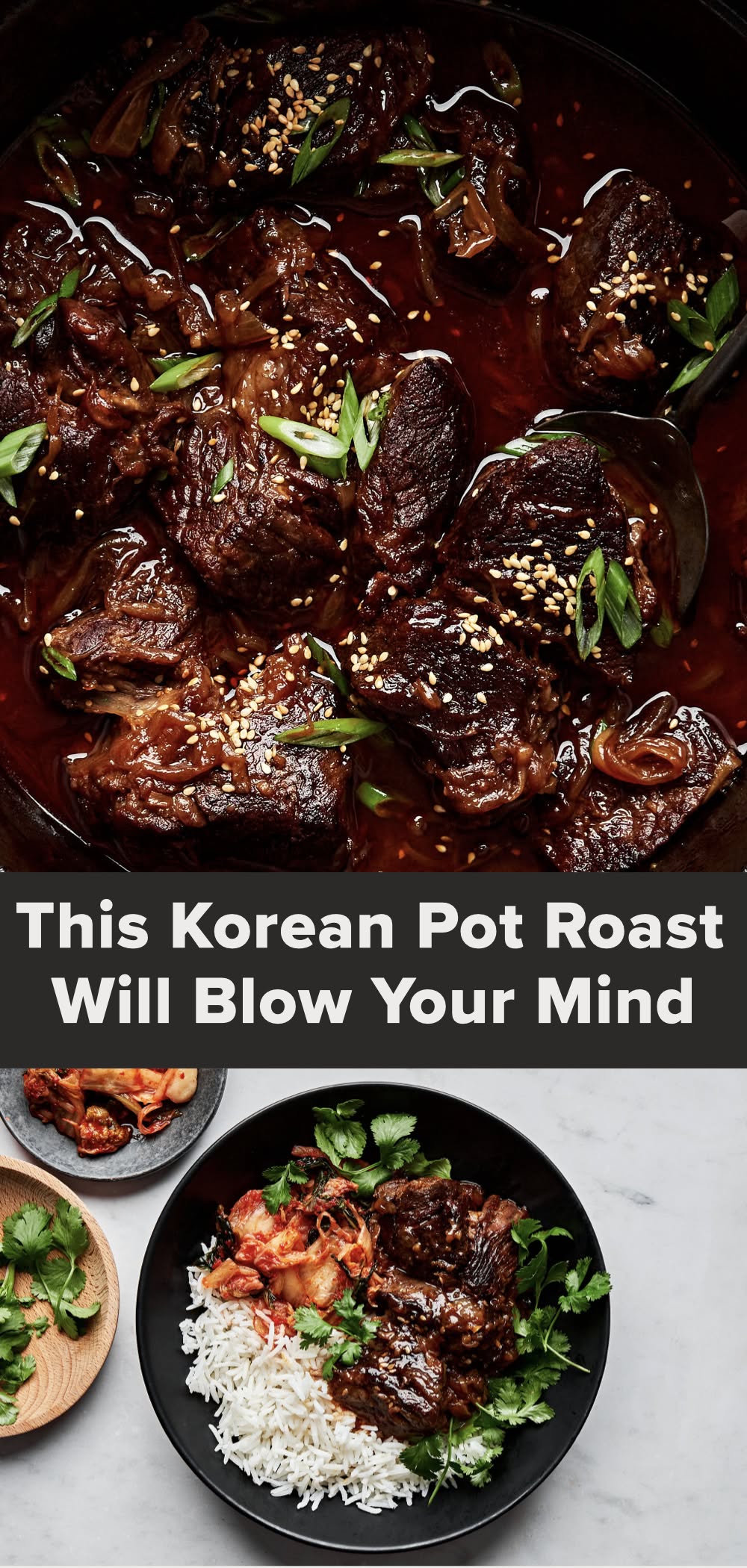
Korean Style Pot Roast
Korean Style Pot Roast braises chuck in gochujang, soy, and pear until it falls apart, giving you a sweet-spicy one-pot dinner with almost no work.
🧂 Ingredients
- 3.5 lb (1.6 kg) boneless beef chuck roast
- 2 tbsp gochujang (Korean chili paste)
- 1/3 cup (80 ml) soy sauce
- 1/4 cup (60 ml) rice vinegar
- 1 medium Asian pear, grated (about 1 cup)
- 1 large yellow onion, sliced into thick wedges
- 6 garlic cloves, smashed
- 2 tbsp honey
- 2 cups (480 ml) low-sodium beef broth
- 2 tbsp toasted sesame oil
- 3 medium carrots, cut into 2-inch chunks
📋 Instructions
- 1Heat the oven — Set a rack in the lower third of the oven and preheat to 325°F (165°C). A moderate oven keeps the braise at a gentle bubble for the full cook time.
- 2Pat and season the beef — Pat the chuck roast dry with paper towels and season all over with 1 tsp salt and 1/2 tsp black pepper. Dry meat browns better than wet meat.
- 3Sear both sides — Heat 1 tbsp neutral oil in a Dutch oven over medium-high heat until it shimmers, about 2 minutes. Sear the roast 4 to 5 minutes per side until deep golden brown, then set it aside on a plate.
- 4Soften the onion — Lower the heat to medium and add the onion wedges and smashed garlic. Cook 4 to 5 minutes, stirring, until the onion edges are soft and lightly golden.
- 5Build the sauce — In a bowl, whisk the gochujang, soy sauce, rice vinegar, grated pear, honey, and beef broth. Pour it into the pot and scrape up the browned bits with a wooden spoon.
- 6Braise low and slow — Return the roast to the pot, cover, and bake at 325°F (165°C) for 2 hours 30 minutes. The liquid should be bubbling gently at the edges, not boiling hard.
- 7Add the carrots — Nestle the carrot chunks around the beef, cover, and bake another 45 to 50 minutes until the beef shreds easily with a fork and reads 205°F (96°C) at the center.
- 8Rest and finish — Move the roast to a board and rest 15 minutes. Stir the sesame oil into the sauce, then shred the beef and return it to the pot with the carrots and sauce.

Mira writes about everyday money habits for people who never got a straight answer about budgeting. Her angle is small, repeatable routines over dramatic overhauls, and she tests every tip on her own household first. She favors plain numbers, real receipts, and admitting when something did not work.