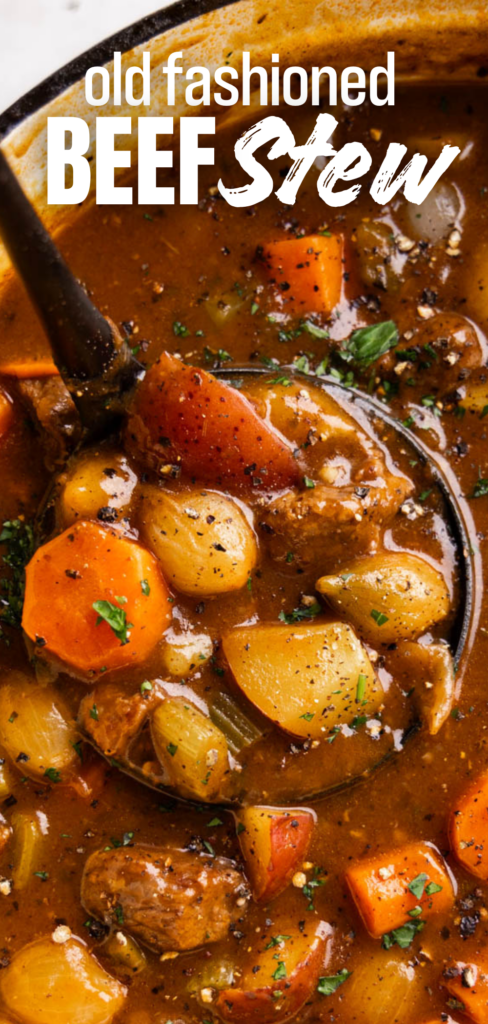
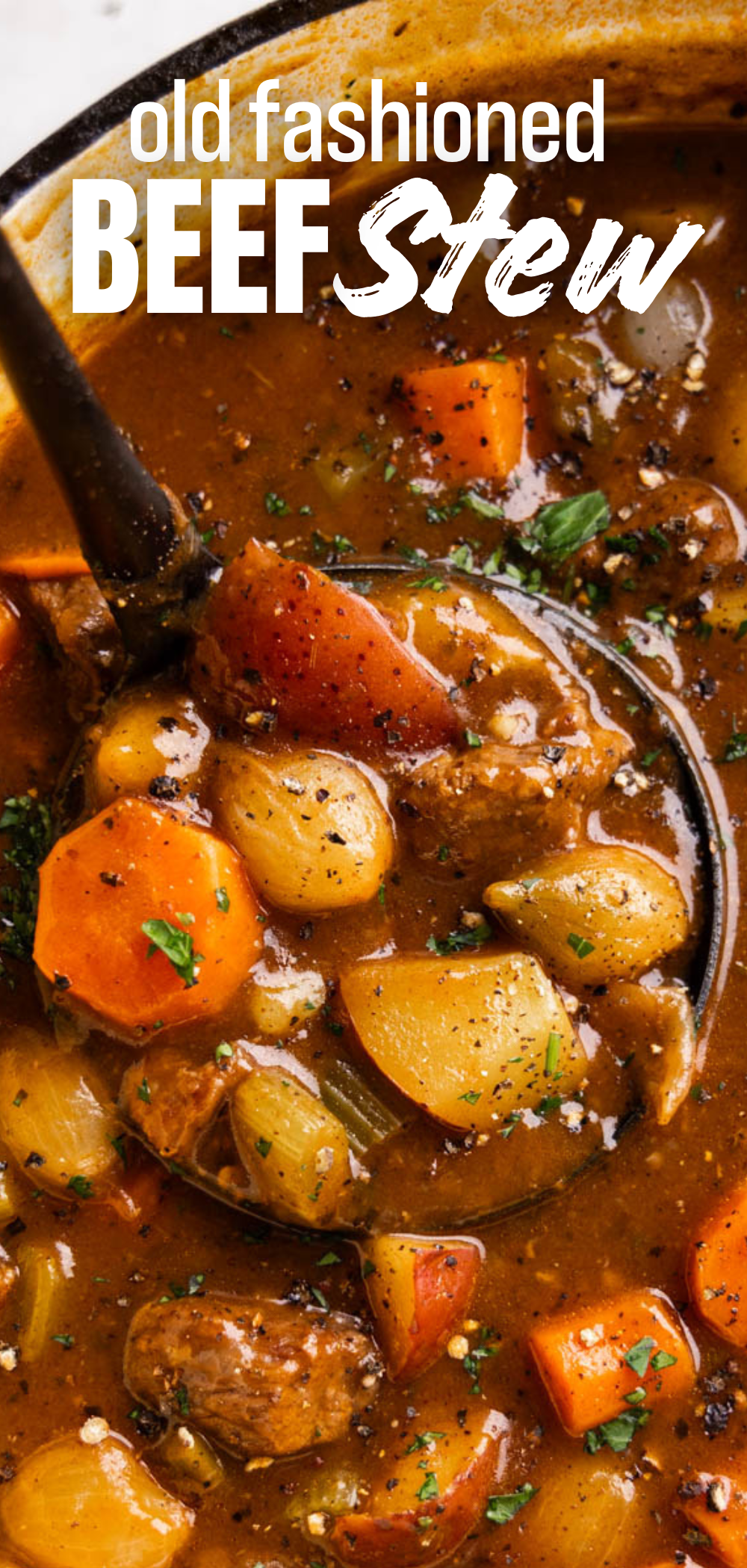
Old Fashioned Beef Stew is what you make when the weather has opinions and you would rather not hear them. The finished result: chunks of chuck that give way under a spoon, carrots and potatoes that hold their shape, and a gravy dark enough to be mistaken for something you spent all day on. It takes about an hour and ten minutes, most of it unattended.
Advertisements1
Before you touch anything, know the failure point: browning happens in batches or it does not happen at all. A crowded pot steams the beef gray and you lose the crust that thickens and colors everything downstream. Two batches, ten minutes each, and you are ahead.
The method is plain: brown, soften, deglaze, simmer, thicken. No roux at the start, no flour on the meat, no guessing. Tools: a heavy 5- to 6-quart Dutch oven with a lid, a wooden spoon, tongs, a cutting board, a chef's knife, a liquid measuring cup, and a lid that actually seals.
Why You'll Love This Recipe
About the Ingredients
3 lb (1.35 kg) beef chuck, cut into 1 1/2-inch cubes
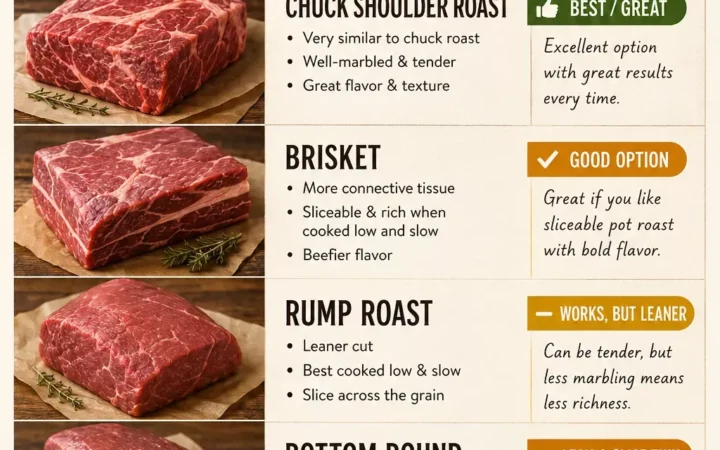
Chuck is the right cut because its connective tissue melts into gelatin and thickens the gravy. If chuck is unavailable, boneless short rib works but will need about 15 extra minutes of simmering.
2 1/2 tsp kosher salt, divided
Diamond Crystal kosher salt is the reference here; if using fine table salt, cut the total to about 1 3/4 tsp. Season the beef in two stages so the interior is not bland.
1 1/2 tsp freshly ground black pepper
Coarse grind gives better texture and less heat than fine dust. Pre-ground pepper loses its bite fast, so grind it when you need it.
3 tbsp vegetable oil, divided
Use an oil with a high smoke point; canola or grapeseed are fine stand-ins. Do not substitute olive oil for the searing step, as it will smoke before the beef browns.
1 large yellow onion, chopped into 1-inch pieces
Yellow onion gives the deepest sweetness; white onion is sharper and works if you like a little bite. Frozen chopped onion is acceptable in a pinch, but drain it well.
3 medium carrots, peeled and cut into 1-inch rounds
Look for carrots of even thickness so they cook at the same rate; thick ones should be halved lengthwise. Parsnips can replace up to half the carrots for a sweeter, earthier profile.
1 lb (450 g) Yukon Gold potatoes, cut into 1 1/2-inch chunks
Yukon Golds hold their shape but turn creamy at the edges; russets will break down and thicken the gravy instead. Do not use waxy red potatoes, which stay firm and slightly waxy in the sauce.
3 tbsp tomato paste
Tomato paste adds body and a faint sweetness without tasting of tomato. If you only have tomato sauce, use 1/3 cup and reduce the beef broth by the same amount.
3 tbsp all-purpose flour
Flour is sprinkled in after the vegetables soften so it toasts in the fat and thickens without lumps. For a gluten-free version, use 1 1/2 tbsp cornstarch mixed with cold water at the very end.
4 cups (960 ml) low-sodium beef broth
Low-sodium lets you control the final seasoning; if using regular broth, skip the last salt addition until you taste. Better Than Bouillon dissolved in water is a solid substitute.
2 dried bay leaves and 1 tsp dried thyme
Bay and thyme are the traditional backbone; fresh thyme needs about twice the amount. Tie them in cheesecloth if you dislike fishing leaves out of the pot.
1 tbsp Worcestershire sauce
Worcestershire adds savory depth and a little acid. Soy sauce plus a squeeze of lemon is a reasonable substitute if you are out.
Tips & Tricks
Brown in Batches
Crowding the pot drops the temperature and steams the beef gray instead of searing it, so cook in two batches and give each piece room.
Scrape the Fond
The browned bits on the bottom of the pot are the flavor base; deglaze with broth and scrape with a wooden spoon until the surface is clean before adding anything else.
Thicken Before the Potatoes
Sprinkle the flour over the vegetables and stir for a full minute before adding liquid, or you will get raw-flour pockets in the finished stew.
Season at the End
Broth reduces and concentrates salt, so hold back the final salt until the beef is tender and you have tasted the gravy.
Pro Tips
Step-by-Step Instructions
1. Pat the Beef Dry
Pat the cubed chuck thoroughly dry with paper towels and season with 1 1/2 tsp of the salt and all the pepper. Dry meat browns; wet meat steams.
2. Sear in Two Batches
Heat 2 tbsp of the oil in a 5- to 6-quart Dutch oven over medium-high heat until it shimmers, about 2 minutes. Add half the beef and cook 8 to 10 minutes, turning, until deeply golden brown on all sides; transfer to a plate and repeat with the remaining oil and beef.
3. Soften the Aromatics
Lower the heat to medium, add the onion and carrots, and cook 5 to 6 minutes, stirring, until the onion is translucent and the edges are just golden. Stir in the tomato paste and cook 1 minute until it darkens slightly.
4. Toast the Flour
Sprinkle the flour over the vegetables and stir constantly for 1 minute, until no dry flour remains and the mixture smells faintly toasted. This is the thickening step; skipping the full minute leaves a raw taste.
5. Deglaze the Pot
Pour in about 1/2 cup of the broth and scrape the bottom of the pot with a wooden spoon until the browned bits lift and the surface is clean. Add the remaining broth, Worcestershire, bay leaves, and thyme.
6. Simmer the Beef
Return the beef and any juices to the pot, bring to a bare simmer at 200 F (93 C), cover, and cook 45 minutes. The liquid should bubble gently at the edges, not roll.
7. Add the Potatoes
Stir in the potatoes and the remaining 1 tsp salt, cover, and simmer another 25 to 30 minutes, until the beef pulls apart with a fork and the potatoes are tender when pierced. Taste and adjust salt.
8. Rest and Serve
Remove the bay leaves, take the pot off the heat, and let it sit 10 minutes before ladling into bowls. The gravy thickens as it rests.
Delicious Variations
Red Wine Version
Replace 1 cup of the broth with dry red wine and deglaze with it first, simmering 2 minutes to cook off the alcohol before adding the rest.
Slow Cooker Version
Brown the beef and vegetables on the stove as written, then transfer everything to a slow cooker and cook on low for 7 hours, adding the potatoes in the last 2 hours.
Mushroom and Barley
Swap 1/2 lb of the potatoes for cremini mushrooms and add 1/3 cup pearl barley with the broth, adding 1 extra cup of liquid and 20 minutes of simmering.
How to Store Old Fashioned Beef Stew
Refrigerator
Store in an airtight container for up to 4 days; the gravy thickens considerably when cold, so loosen with a splash of broth when reheating.
Freezer
Freeze in portions for up to 3 months; potatoes soften on thaw, so consider freezing before adding them if you plan ahead.
Reheating
Reheat gently on the stovetop over medium-low heat, about 8 to 10 minutes, stirring occasionally and adding broth or water to reach the right consistency.
Frequently Asked Questions
Q: What is the best cut of beef for old fashioned beef stew?
Chuck is the best cut because its marbling and connective tissue break down into a tender bite and a naturally thick gravy. Short rib and bottom round are workable substitutes, though round needs a longer, gentler simmer to avoid toughness.
Q: Why is my beef stew tough?
The beef is usually undercooked or was boiled rather than simmered. Chuck needs roughly 70 minutes at a bare simmer around 200 F (93 C) to break down; a hard rolling boil tightens the muscle fibers and keeps them tough no matter how long you cook.
Q: How do I thicken beef stew if it is too thin?
Whisk 1 tablespoon of cornstarch into 2 tablespoons of cold water and stir it into the simmering stew, then cook 2 minutes until it visibly thickens. Alternatively, mash a few potato chunks against the side of the pot and stir them back in.
Q: Can I make old fashioned beef stew in a slow cooker?
Yes, but brown the beef and vegetables on the stove first, because a slow cooker cannot reach the heat needed for browning. Then cook on low for 7 hours, adding the potatoes in the last 2 hours so they do not turn to mush.
Q: Do you put potatoes in beef stew from the start?
No, add them in the last 25 to 30 minutes of simmering. Potatoes added at the beginning absorb liquid and disintegrate, leaving you with a cloudy, starchy gravy instead of distinct chunks.
Make it once and the timing becomes muscle memory: brown in two batches, scrape the pot, simmer low. If you cook it, tell me whether the gravy needed that last pinch of salt. Measure twice, then measure again.
Old Fashioned Beef Stew
Old Fashioned Beef Stew delivers fork-tender chuck and vegetables in a deep, glossy gravy. One pot, no fuss, and the whole house smells like Sunday.
🧂 Ingredients
- 3 lb (1.35 kg) beef chuck, cut into 1 1/2-inch cubes
- 2 1/2 tsp kosher salt, divided
- 1 1/2 tsp freshly ground black pepper
- 3 tbsp vegetable oil, divided
- 1 large yellow onion, chopped into 1-inch pieces
- 3 medium carrots, peeled and cut into 1-inch rounds
- 1 lb (450 g) Yukon Gold potatoes, cut into 1 1/2-inch chunks
- 3 tbsp tomato paste
- 3 tbsp all-purpose flour
- 4 cups (960 ml) low-sodium beef broth
- 2 dried bay leaves and 1 tsp dried thyme
- 1 tbsp Worcestershire sauce
📋 Instructions
- 1Pat the Beef Dry — Pat the cubed chuck thoroughly dry with paper towels and season with 1 1/2 tsp of the salt and all the pepper. Dry meat browns; wet meat steams.
- 2Sear in Two Batches — Heat 2 tbsp of the oil in a 5- to 6-quart Dutch oven over medium-high heat until it shimmers, about 2 minutes. Add half the beef and cook 8 to 10 minutes, turning, until deeply golden brown on all sides; transfer to a plate and repeat with the remaining oil and beef.
- 3Soften the Aromatics — Lower the heat to medium, add the onion and carrots, and cook 5 to 6 minutes, stirring, until the onion is translucent and the edges are just golden. Stir in the tomato paste and cook 1 minute until it darkens slightly.
- 4Toast the Flour — Sprinkle the flour over the vegetables and stir constantly for 1 minute, until no dry flour remains and the mixture smells faintly toasted. This is the thickening step; skipping the full minute leaves a raw taste.
- 5Deglaze the Pot — Pour in about 1/2 cup of the broth and scrape the bottom of the pot with a wooden spoon until the browned bits lift and the surface is clean. Add the remaining broth, Worcestershire, bay leaves, and thyme.
- 6Simmer the Beef — Return the beef and any juices to the pot, bring to a bare simmer at 200 F (93 C), cover, and cook 45 minutes. The liquid should bubble gently at the edges, not roll.
- 7Add the Potatoes — Stir in the potatoes and the remaining 1 tsp salt, cover, and simmer another 25 to 30 minutes, until the beef pulls apart with a fork and the potatoes are tender when pierced. Taste and adjust salt.
- 8Rest and Serve — Remove the bay leaves, take the pot off the heat, and let it sit 10 minutes before ladling into bowls. The gravy thickens as it rests.

Tomas writes about home repair and small-scale building projects, focused on what a careful beginner can actually finish. He explains tools and materials by what they do rather than by brand, and he walks through mistakes he has made on his own projects. His angle is honest sequencing: what to do first, what to skip, and when to call someone else.