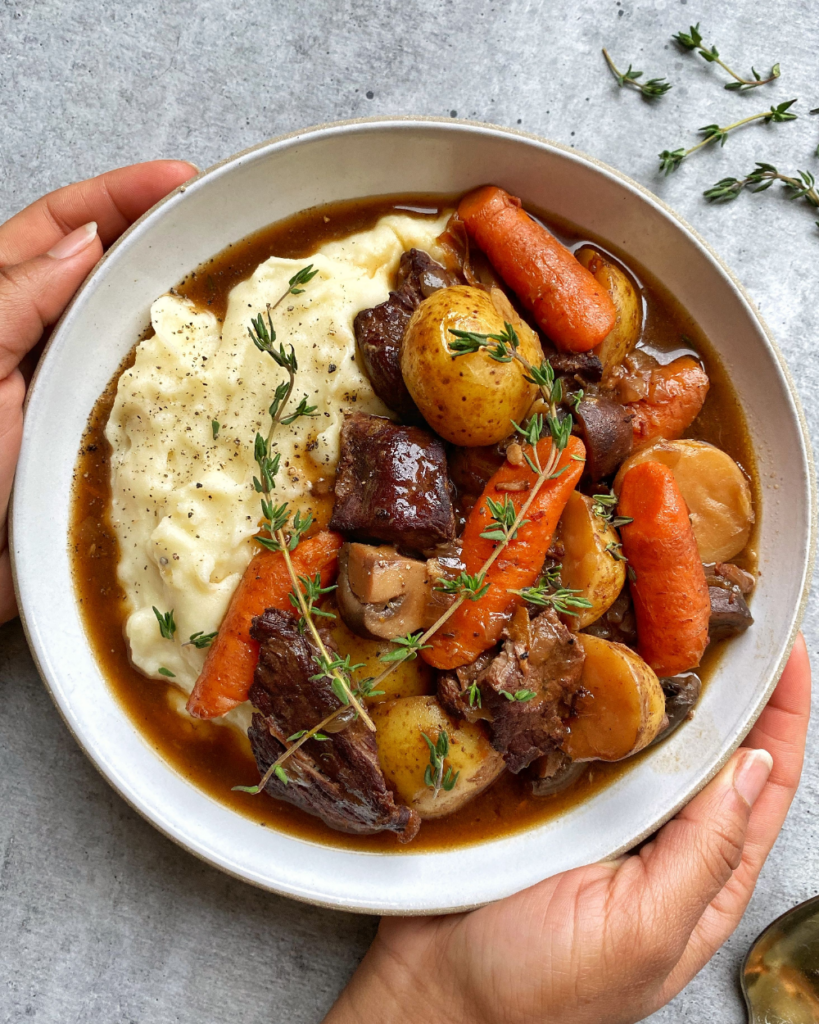
This red wine-braised beef stew is the kind of dinner that makes a cold night feel like a gift. Chuck roast simmers low and slow in a bold red wine and tomato broth until it shreds at the touch of a fork, while Yukon Gold potatoes and thick carrot coins soak up every drop of that glossy, savory sauce.
Advertisements1
The secret is in the layering: browning the beef in batches for real crust, deglazing the pot with wine to lift every caramelized bit, and finishing with a knob of butter for a silky, restaurant-quality braise you made in your own Dutch oven.
It is a weekend-worthy meal that reheats even better the next day, so it is equally perfect for Sunday supper or a make-ahead dinner party.
Why You'll Love This Recipe
About the Ingredients
3 lb (1.4 kg) beef chuck roast, cut into 1 1/2-inch cubes
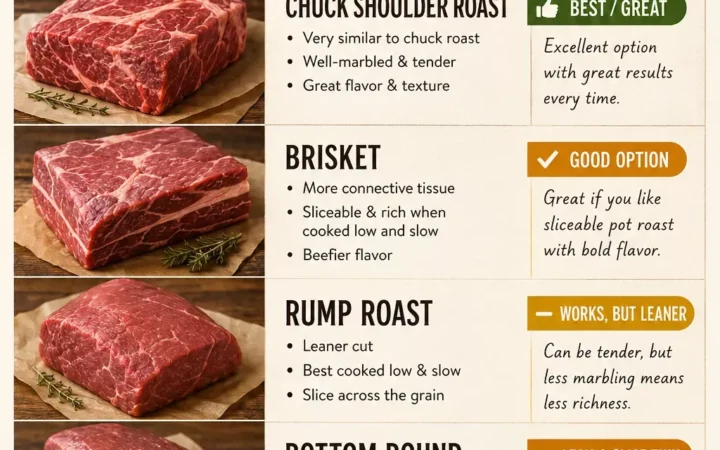
Chuck is ideal because its marbling breaks down into gelatin-rich tenderness. If unavailable, use beef short ribs or brisket, but avoid lean cuts like sirloin, which turn dry.
2 1/2 tsp kosher salt, divided
Kosher salt seasons more evenly than fine table salt. If using table salt, reduce to about 1 3/4 tsp since it is much saltier by volume.
1 tsp freshly ground black pepper
Fresh-cracked pepper blooms in the hot oil. Pre-ground pepper works in a pinch but add it with the liquid instead of the sear.
3 tbsp olive oil
Olive oil handles the high sear well; use a neutral oil like canola if you prefer a higher smoke point. Buy oil in dark glass to keep it fresh longer.
1 large yellow onion, diced (about 1 1/2 cups)
Yellow onion gives the sweetest braise base. Swap in two shallots for a milder, more delicate sauce.
3 medium carrots, cut into 1-inch coins
Look for firm carrots with no bend at the tip. If you only have baby carrots, halve them lengthwise so they cook at the same rate.
1 1/2 lb (680 g) Yukon Gold potatoes, cut into 1 1/2-inch chunks
Yukon Golds hold their shape while turning creamy inside. Russets will work but tend to crumble, so cut them larger.
3 garlic cloves, minced
Fresh garlic is worth it here. If using jarred, add an extra clove since the flavor is milder.
2 tbsp tomato paste
Tomato paste adds body and umami. Substitute 3 tbsp tomato sauce and simmer 5 minutes longer to concentrate it.
1 cup (240 ml) dry red wine, such as Cabernet or Côtes du Rhône
Use a wine you would happily drink; cooking concentrates its flavor. For alcohol-free, use 1 cup beef broth plus 1 tbsp red wine vinegar.
3 cups (720 ml) low-sodium beef broth
Low-sodium lets you control the final seasoning. Chicken broth is a fine lighter substitute; add 1 tsp soy sauce for extra depth.
2 bay leaves and 1 tsp dried thyme
Dried thyme holds up better than fresh in a long braise. Tie the bay leaves in cheesecloth for easy retrieval if you like.
Tips & Tricks
Brown in Batches
Crowding the pot steams the beef instead of searing it, so cook in two or three batches and give each piece space.
Scrape the Fond
After adding the wine, scrape every browned bit off the bottom; those caramelized pieces are the flavor backbone of the sauce.
Keep It at a Bare Simmer
Vigorous boiling toughens beef and makes it stringy. Adjust the heat so only small bubbles break the surface.
Season at the End
The sauce reduces and concentrates, so taste and adjust salt only after the beef is tender.
Pro Tips
Step-by-Step Instructions
1. Season and Dry the Beef
Pat the beef cubes very dry with paper towels, then toss with 2 tsp of the salt and all the pepper. Drying the surface is what allows a deep crust to form rather than steam.
2. Sear in Batches
Heat 2 tbsp olive oil in a Dutch oven over medium-high heat (about 400°F / 205°C) until it shimmers. Add half the beef and sear undisturbed for 4 minutes, then turn and sear 3 to 4 minutes more until deeply golden brown on two sides; transfer to a plate and repeat with the remaining beef and 1 tbsp oil.
3. Soften the Vegetables
Reduce heat to medium (about 350°F / 175°C) and add the onion and carrots to the pot. Cook 5 to 6 minutes, stirring, until the onion is translucent and the edges are just golden.
4. Bloom Garlic and Tomato
Stir in the garlic and tomato paste and cook 60 to 90 seconds until the paste darkens to a brick red and smells sweet, which means the raw tomato flavor has cooked out.
5. Deglaze with Wine
Pour in the red wine and scrape the bottom of the pot firmly with a wooden spoon for about 2 minutes, until the liquid reduces by half and no browned bits remain stuck to the pan.
6. Braise the Beef
Return the beef and any juices to the pot, add the broth, bay leaves, and thyme, and bring to a bare simmer (about 200°F / 93°C at the surface). Cover and cook 90 minutes, adjusting heat so only small bubbles break the surface.
7. Add Potatoes and Finish
Stir in the potatoes and remaining 1/2 tsp salt, cover, and simmer 40 to 45 minutes more, until the beef shreds easily with a fork and the potatoes are tender when pierced with a knife. Remove the bay leaves, taste, and adjust seasoning.
8. Rest and Serve
Let the stew rest off heat 10 minutes so the sauce thickens and the flavors settle. Ladle into bowls and spoon plenty of the glossy braising liquid over the top.
Delicious Variations
Mushroom and Red Wine Stew
Add 8 oz sliced cremini mushrooms with the onions for an earthier, meatier vegetarian-leaning version.
Herbes de Provence Twist
Swap the thyme for 1 1/2 tsp herbes de Provence and add a strip of orange peel during the braise for a Provençal aroma.
Slow Cooker Version
Sear the beef and vegetables on the stove, then transfer everything except the potatoes to a slow cooker and cook on low 6 hours, adding potatoes in the last 2 hours.
How to Store Red Wine-Braised Beef Stew with Potatoes and Carrots
Refrigerator
Store in an airtight container in the refrigerator up to 4 days; the flavor actually improves by day two.
Freezer
Freeze in portions up to 3 months in freezer-safe containers, leaving 1 inch of headspace; thaw overnight in the refrigerator.
Reheating
Reheat gently on the stovetop over medium-low heat (about 300°F / 150°C) for 8 to 10 minutes, stirring occasionally, until steaming hot; add a splash of broth if the sauce has thickened too much.
Frequently Asked Questions
Q: What is the best wine for beef stew?
Use a dry, full-bodied red such as Cabernet Sauvignon, Côtes du Rhône, or Merlot that you would drink on its own. Avoid sweet wines and heavily oaked varieties, which turn bitter when reduced. If you do not want alcohol, substitute beef broth plus a tablespoon of red wine vinegar.
Q: Why is my beef stew tough?
Tough stew almost always means it was not braised long enough or the heat was too high. Chuck needs a gentle, bare simmer for at least 90 minutes before the potatoes go in; boiling toughens the muscle fibers instead of melting the collagen.
Q: Can I make this beef stew ahead of time?
Yes, and it is even better made a day ahead. Cool it quickly, refrigerate up to 4 days, and reheat gently on the stovetop, adding a splash of broth if needed. The flavors deepen significantly overnight.
Q: Do I have to brown the beef first?
You can skip it in a pinch, but browning is what gives the stew its deep, roasted flavor and thick sauce. If you are short on time, brown only one batch quickly rather than none at all.
Q: How do I thicken beef stew?
The simplest fix is to simmer uncovered for 10 to 15 minutes so the liquid reduces and thickens naturally. For a faster result, whisk 1 tbsp cornstarch with 2 tbsp cold water and stir it in, simmering 2 minutes until glossy.
If you make this red wine-braised beef stew, I would love to hear how it turned out. Snap a photo of your steaming bowl, tag me, and tell me whether you went classic or tried the mushroom variation.
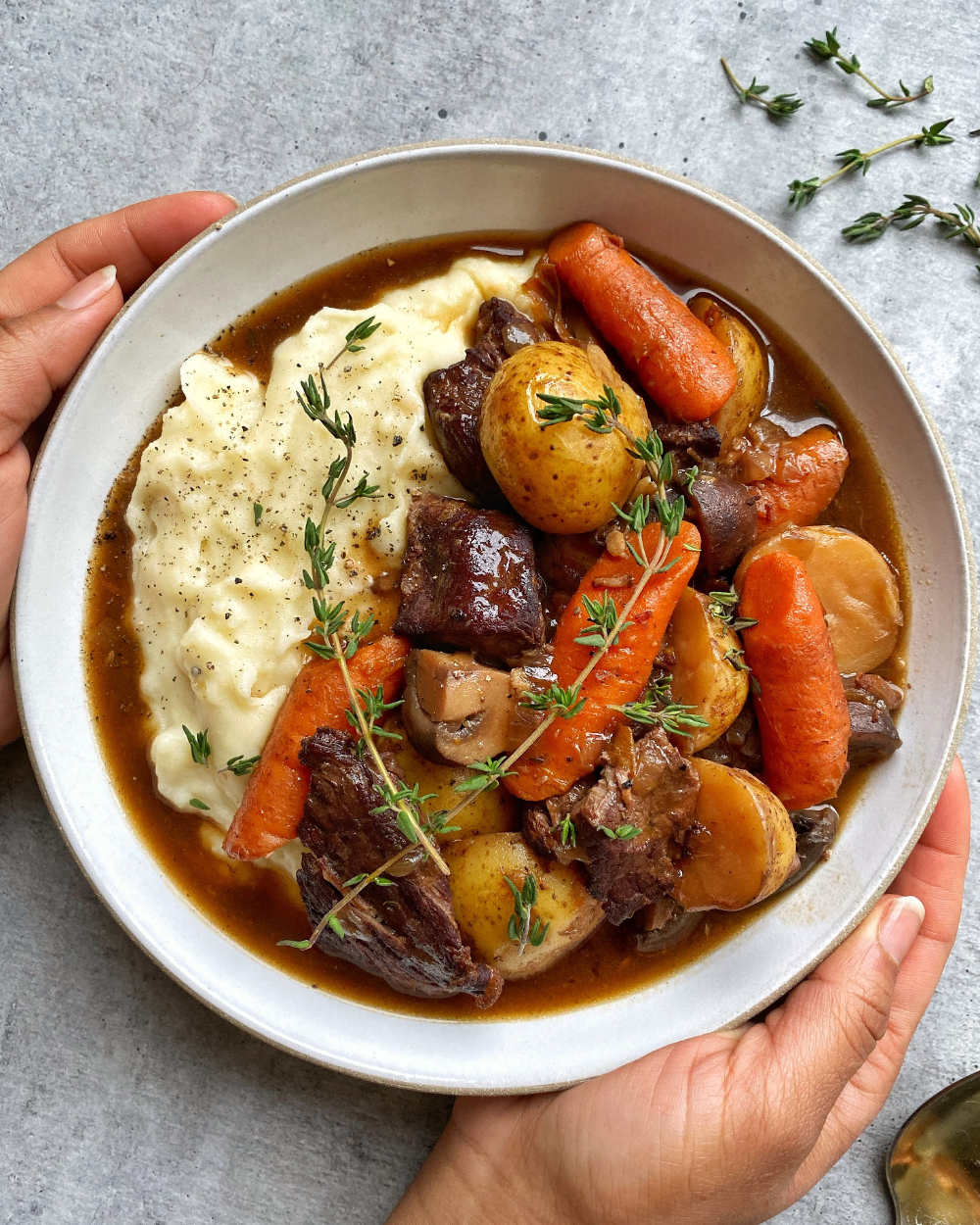
Red Wine-Braised Beef Stew with Potatoes and Carrots
Red Wine-Braised Beef Stew with Potatoes and Carrots is a rich, fall-apart-tender one-pot dinner that fills your kitchen with deep, savory aroma.
🧂 Ingredients
- 3 lb (1.4 kg) beef chuck roast, cut into 1 1/2-inch cubes
- 2 1/2 tsp kosher salt, divided
- 1 tsp freshly ground black pepper
- 3 tbsp olive oil
- 1 large yellow onion, diced (about 1 1/2 cups)
- 3 medium carrots, cut into 1-inch coins
- 1 1/2 lb (680 g) Yukon Gold potatoes, cut into 1 1/2-inch chunks
- 3 garlic cloves, minced
- 2 tbsp tomato paste
- 1 cup (240 ml) dry red wine, such as Cabernet or Côtes du Rhône
- 3 cups (720 ml) low-sodium beef broth
- 2 bay leaves and 1 tsp dried thyme
📋 Instructions
- 1Season and Dry the Beef — Pat the beef cubes very dry with paper towels, then toss with 2 tsp of the salt and all the pepper. Drying the surface is what allows a deep crust to form rather than steam.
- 2Sear in Batches — Heat 2 tbsp olive oil in a Dutch oven over medium-high heat (about 400°F / 205°C) until it shimmers. Add half the beef and sear undisturbed for 4 minutes, then turn and sear 3 to 4 minutes more until deeply golden brown on two sides; transfer to a plate and repeat with the remaining beef and 1 tbsp oil.
- 3Soften the Vegetables — Reduce heat to medium (about 350°F / 175°C) and add the onion and carrots to the pot. Cook 5 to 6 minutes, stirring, until the onion is translucent and the edges are just golden.
- 4Bloom Garlic and Tomato — Stir in the garlic and tomato paste and cook 60 to 90 seconds until the paste darkens to a brick red and smells sweet, which means the raw tomato flavor has cooked out.
- 5Deglaze with Wine — Pour in the red wine and scrape the bottom of the pot firmly with a wooden spoon for about 2 minutes, until the liquid reduces by half and no browned bits remain stuck to the pan.
- 6Braise the Beef — Return the beef and any juices to the pot, add the broth, bay leaves, and thyme, and bring to a bare simmer (about 200°F / 93°C at the surface). Cover and cook 90 minutes, adjusting heat so only small bubbles break the surface.
- 7Add Potatoes and Finish — Stir in the potatoes and remaining 1/2 tsp salt, cover, and simmer 40 to 45 minutes more, until the beef shreds easily with a fork and the potatoes are tender when pierced with a knife. Remove the bay leaves, taste, and adjust seasoning.
- 8Rest and Serve — Let the stew rest off heat 10 minutes so the sauce thickens and the flavors settle. Ladle into bowls and spoon plenty of the glossy braising liquid over the top.