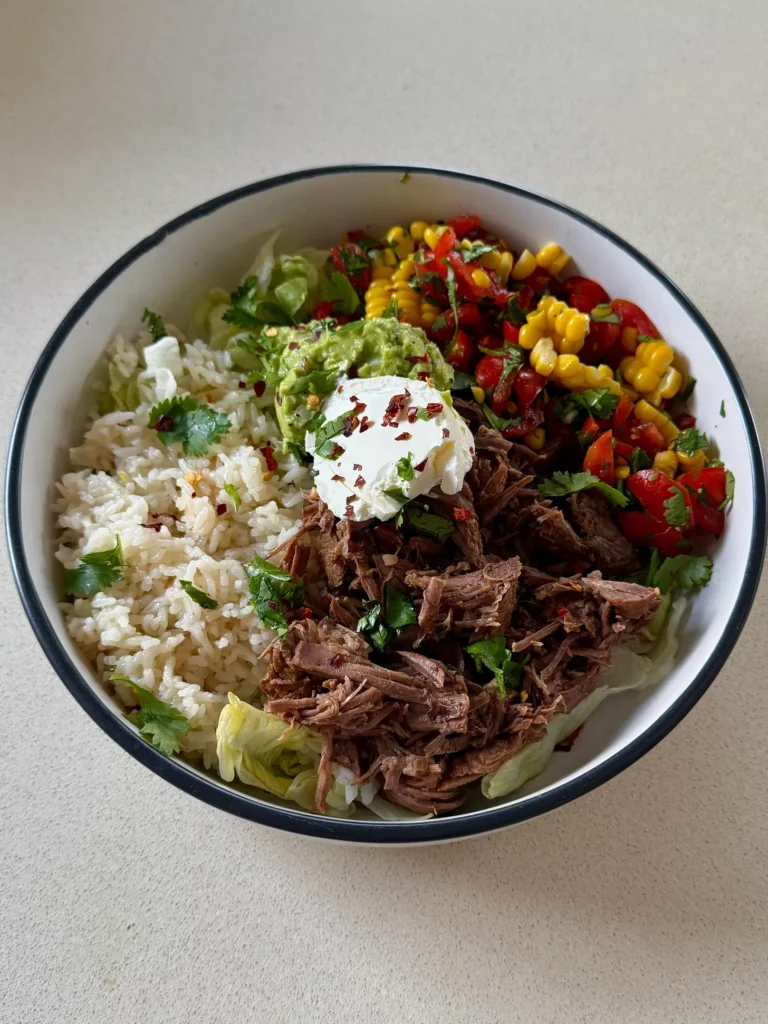
There is a reason this slow cooked beef bowl shows up in my kitchen every single week: it is the one dinner that tastes like a Sunday project but takes about fifteen minutes of actual hands-on work. A chuck roast goes into the pot with soy, garlic, ginger, and a splash of vinegar, and three hours later you have shreddable, lacquered beef and a sauce that begs to be spooned over hot rice.
Advertisements1
The trick is a quick sear before the braise, which builds a deep browned crust, plus a final ten-minute uncovered simmer that reduces the braising liquid into a sticky glaze instead of a watery broth. I keep the aromatics chunky so they melt into the sauce, and I always make a double batch because the leftovers are arguably better than day one.
Serve it in deep bowls with steamed jasmine rice, quick-pickled cucumber, and a shower of scallions. It is weeknight-friendly, freezer-friendly, and the kind of bowl that makes people ask for the recipe before they finish eating.
Why You'll Love This Recipe
About the Ingredients
3 lb (1.35 kg) beef chuck roast, cut into 2-inch chunks
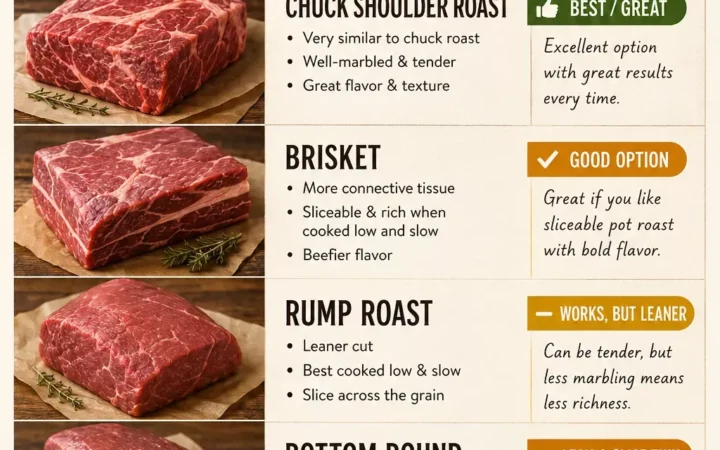
Chuck is ideal because its heavy marbling breaks down into shreddable tenderness; if unavailable, use beef short ribs or a 50/50 mix of brisket and chuck. Look for a roast with visible white flecks of fat rather than a uniformly lean cut.
1 1/2 tsp kosher salt, plus more to taste
Kosher salt crystals are larger and season more gently than table salt; if using fine table salt, cut the amount to 1 tsp. Season the meat right before searing so it stays on the surface and browns rather than steams.
2 tbsp neutral oil, such as canola or grapeseed
A high-smoke-point oil is essential for the hard sear; olive oil will smoke and turn bitter at this heat. Avocado oil works equally well if you have it on hand.
1 large yellow onion, cut into 1-inch wedges
Yellow onion gives the sweetest, deepest braise; white onion is sharper and red onion turns the sauce an unappealing pink. Keep the wedges chunky so they soften into the sauce without vanishing.
6 garlic cloves, smashed and peeled
Smashed cloves release more allicin than sliced ones and hold up through a long braise; jarred minced garlic turns bitter after 90 minutes in the oven. Leave them whole and fish them out only if you dislike the texture.
1 tbsp freshly grated ginger
Fresh ginger brings a bright, lemony heat that ground ginger cannot match; freeze the knob first and grate it on a microplane for the finest texture. If you only have ground ginger, use 1 tsp and add it with the liquid.
1/2 cup (120 ml) low-sodium soy sauce
Low-sodium soy sauce lets you control the final salt level; regular soy sauce will make the glaze too salty after reduction. For a gluten-free bowl, substitute tamari one-for-one.
2 tbsp rice vinegar
Rice vinegar adds a mild acidity that cuts through the beef fat without tasting sharp; apple cider vinegar is a fine substitute but use 1 tbsp less. Do not skip it, as the acid is what makes the glaze taste bright rather than heavy.
2 tbsp packed brown sugar
Brown sugar caramelizes into the glaze and gives the beef its lacquered shine; honey or maple syrup can replace it, but lower the oven temperature by 15F (10C) to prevent scorching. Dark brown sugar gives a deeper molasses note.
1 cup (240 ml) beef broth
Use low-sodium broth so the reduction does not oversalt; a splash of dry sherry or red wine in place of 1/4 cup of broth adds complexity. Water plus a teaspoon of Better Than Bouillon is a solid pantry swap.
2 tbsp cornstarch whisked into 2 tbsp cold water
This slurry thickens the glaze at the end; arrowroot powder works as a one-for-one substitute but breaks down if boiled hard. Whisk it fresh, as it settles within minutes.
4 cups cooked jasmine rice, for serving
Jasmine rice is fragrant and slightly sticky, perfect for soaking up glaze; short-grain sushi rice or cauliflower rice both work. Cook it while the beef rests so everything lands hot at the same time.
Tips & Tricks
Do not crowd the pot when searing
Brown the beef in two batches over medium-high heat, because a crowded pot traps steam and you end up with gray, boiled meat instead of a flavorful crust.
Reduce the sauce uncovered at the end
The last ten minutes on the stovetop are what turn broth into a glaze. If it still looks thin, simmer two more minutes and check again.
- Keep the braise at a gentle simmer, not a rolling boil: If the liquid bubbles hard, the meat fibers tighten and turn stringy. Aim for lazy bubbles around the edges at 300F (150C) in the oven.
- Shred while hot, then return the beef to the sauce: Hot meat absorbs the glaze; if you shred it cold, the bowl tastes dry even with plenty of sauce poured over.
Pro Tips
Step-by-Step Instructions
1. Heat the oven and pat the beef dry
Preheat the oven to 300F (150C) and pat the beef chunks very dry with paper towels. Dry meat is the single biggest factor in getting a golden brown crust instead of a steamed gray one.
2. Sear the beef in batches
Heat 1 tbsp oil in a Dutch oven over medium-high heat until it shimmers. Add half the beef, season with salt, and sear undisturbed for 4 minutes per side until deeply golden brown, about 8 minutes total; transfer to a plate and repeat with the remaining oil and beef.
3. Soften the aromatics
Lower the heat to medium, add the onion wedges, and cook for 5 minutes until the edges are translucent and lightly browned. Add the garlic and ginger and stir for 45 seconds, just until fragrant, scraping up the browned bits.
4. Build the braising liquid
Pour in the soy sauce, rice vinegar, brown sugar, and beef broth, stirring to dissolve the sugar and loosen everything from the bottom of the pot. Return the beef and any juices to the pot; the liquid should come about halfway up the meat, so add a splash of water if needed.
5. Braise low and slow
Cover and transfer to the oven for 2 hours 45 minutes, until the beef shreds easily when pressed with a fork and a piece registers 200F (93C) on an instant-read thermometer. Check at the 2-hour mark and add water if the pot looks dry.
6. Reduce the sauce into a glaze
Transfer the beef to a bowl with a slotted spoon and set the pot over medium-high heat. Boil the liquid for 6 to 8 minutes until it coats the back of a spoon and bubbles thickly at the edges.
7. Thicken and shred
Off the heat, whisk in the cornstarch slurry, then return to medium heat for 1 minute until the glaze turns glossy and slightly thick. Shred the beef with two forks and fold it back into the glaze, tasting for salt.
8. Build the bowls
Spoon the glazed beef over hot jasmine rice and finish with scallions, sesame seeds, and quick-pickled cucumber. Serve immediately while the glaze is still loose enough to soak into the rice.
Delicious Variations
Korean-Style Gochujang Bowl
Swap 1 tbsp of the soy sauce for gochujang and finish with toasted sesame oil and kimchi for a spicy, funky version.
Mushroom and Beef Bowl
Add 8 oz sliced cremini mushrooms with the onions for a meatier, earthier braise that stretches the beef to eight servings.
Coffee-Rubbed Beef Bowl
Rub the beef with 1 tbsp instant espresso powder before searing for a darker, roastier glaze that pairs beautifully with pickled onions.
How to Store The Slow Cooked Beef Bowl I Make Every Single Week
Refrigerator
Store the beef and glaze together in an airtight container for up to 4 days; keep them combined so the meat stays moist.
Freezer
Freeze in portion-sized containers with plenty of glaze for up to 3 months; thaw overnight in the refrigerator before reheating.
Reheating
Reheat gently in a covered saucepan over medium-low heat with a splash of water for 5 to 7 minutes, or microwave in 30-second bursts, stirring between, until steaming.
Frequently Asked Questions
Q: Can I make this slow cooked beef bowl in a slow cooker?
Yes, you can make it in a slow cooker after searing the beef on the stovetop. Cook on low for 7 to 8 hours or high for 4 hours, then transfer the liquid to a saucepan and reduce it on the stove, since a slow cooker will not evaporate enough liquid to form a glaze.
Q: What cut of beef is best for shredding in a bowl?
Chuck roast is the best cut because its marbling breaks down into tender, shreddable meat after a long braise. Brisket, short ribs, and bottom round also work, but lean cuts like sirloin will turn dry and stringy.
Q: Why did my beef turn out dry and stringy?
Dry beef usually means it was braised too hot or not long enough, so the connective tissue never fully melted. Keep the oven at 300F (150C), make sure the liquid comes halfway up the meat, and cook until a fork slides in with no resistance, which can take up to 3 hours 15 minutes.
Q: How long does this beef bowl last in the fridge?
It keeps for up to 4 days in an airtight container in the refrigerator. Store the beef in its glaze rather than drained, because the sauce keeps the meat moist and the flavor actually improves by day two.
Q: Is this slow cooked beef bowl gluten free?
It is gluten free if you swap the soy sauce for tamari and confirm your broth and cornstarch are certified gluten free. Everything else in the recipe, including the rice and vinegar, is naturally gluten free.
If you make this slow cooked beef bowl, I want to hear how it went. Leave a comment below with the cut of beef you used or the toppings you piled on, and snap a photo of that glossy glaze for a chance to be featured. Then save the recipe, because once it lands in your weekly rotation, you will be making it every single week too.
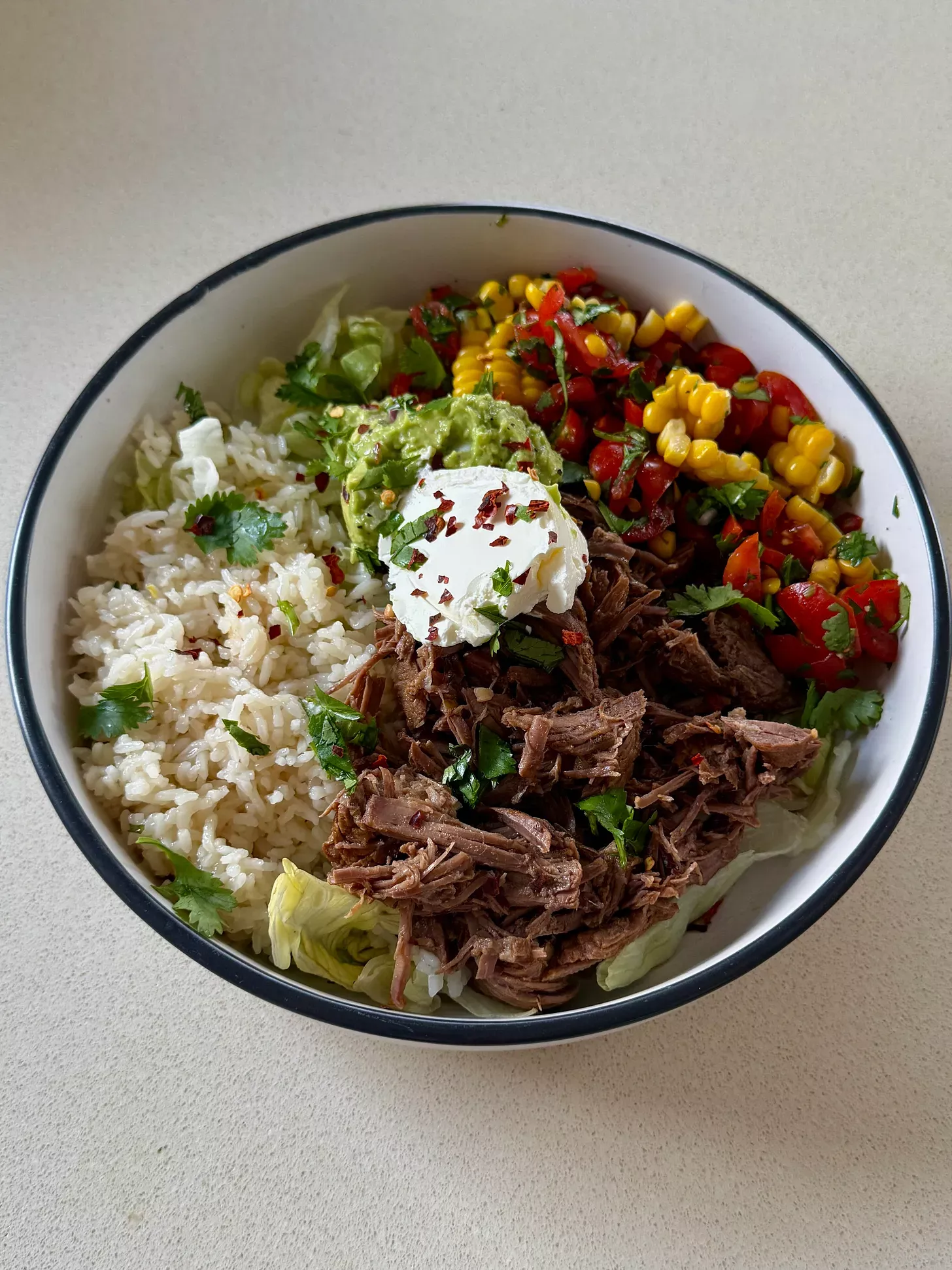
The Slow Cooked Beef Bowl I Make Every Single Week
This slow cooked beef bowl turns a cheap chuck roast into glossy, fork-tender beef over rice with a jammy soy glaze you will crave every single week.
🧂 Ingredients
- 3 lb (1.35 kg) beef chuck roast, cut into 2-inch chunks
- 1 1/2 tsp kosher salt, plus more to taste
- 2 tbsp neutral oil, such as canola or grapeseed
- 1 large yellow onion, cut into 1-inch wedges
- 6 garlic cloves, smashed and peeled
- 1 tbsp freshly grated ginger
- 1/2 cup (120 ml) low-sodium soy sauce
- 2 tbsp rice vinegar
- 2 tbsp packed brown sugar
- 1 cup (240 ml) beef broth
- 2 tbsp cornstarch whisked into 2 tbsp cold water
- 4 cups cooked jasmine rice, for serving
📋 Instructions
- 1Heat the oven and pat the beef dry — Preheat the oven to 300F (150C) and pat the beef chunks very dry with paper towels. Dry meat is the single biggest factor in getting a golden brown crust instead of a steamed gray one.
- 2Sear the beef in batches — Heat 1 tbsp oil in a Dutch oven over medium-high heat until it shimmers. Add half the beef, season with salt, and sear undisturbed for 4 minutes per side until deeply golden brown, about 8 minutes total; transfer to a plate and repeat with the remaining oil and beef.
- 3Soften the aromatics — Lower the heat to medium, add the onion wedges, and cook for 5 minutes until the edges are translucent and lightly browned. Add the garlic and ginger and stir for 45 seconds, just until fragrant, scraping up the browned bits.
- 4Build the braising liquid — Pour in the soy sauce, rice vinegar, brown sugar, and beef broth, stirring to dissolve the sugar and loosen everything from the bottom of the pot. Return the beef and any juices to the pot; the liquid should come about halfway up the meat, so add a splash of water if needed.
- 5Braise low and slow — Cover and transfer to the oven for 2 hours 45 minutes, until the beef shreds easily when pressed with a fork and a piece registers 200F (93C) on an instant-read thermometer. Check at the 2-hour mark and add water if the pot looks dry.
- 6Reduce the sauce into a glaze — Transfer the beef to a bowl with a slotted spoon and set the pot over medium-high heat. Boil the liquid for 6 to 8 minutes until it coats the back of a spoon and bubbles thickly at the edges.
- 7Thicken and shred — Off the heat, whisk in the cornstarch slurry, then return to medium heat for 1 minute until the glaze turns glossy and slightly thick. Shred the beef with two forks and fold it back into the glaze, tasting for salt.
- 8Build the bowls — Spoon the glazed beef over hot jasmine rice and finish with scallions, sesame seeds, and quick-pickled cucumber. Serve immediately while the glaze is still loose enough to soak into the rice.